This is the question we hear more than almost any other: should I buy a two-ram or a horizontal auto-tie? Both are serious industrial balers. Both can handle high volumes. Both will produce sellable bales. But they are not interchangeable - and buying the wrong one for your operation costs you money every day it runs.
HMS sells, refurbishes, and services both machine types across North America. This guide gives you a straight comparison - how each machine works, what it handles best, where each one falls short, and the specific operation profiles that point clearly to one or the other.
How Each Machine Actually Works
Understanding the mechanical difference is the starting point. The two machines solve the same problem differently, and that difference matters for everything that follows.
Horizontal auto-tie baler
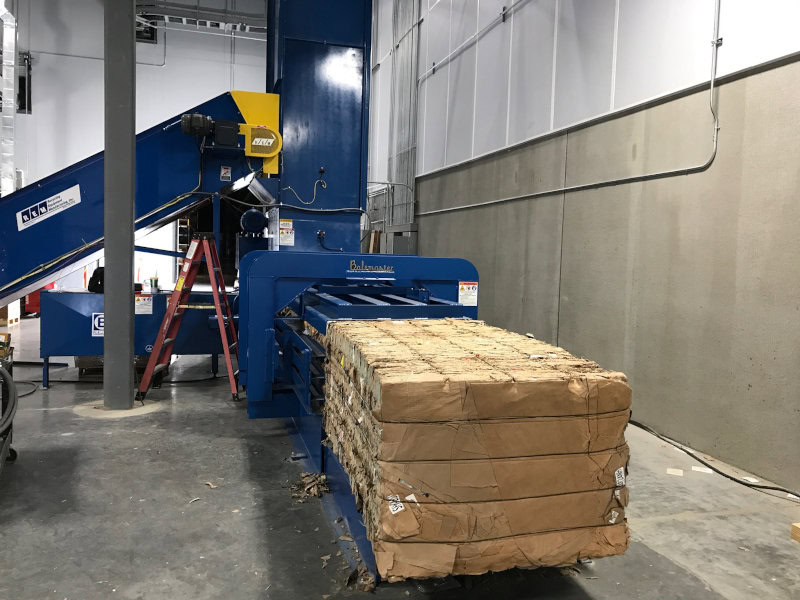
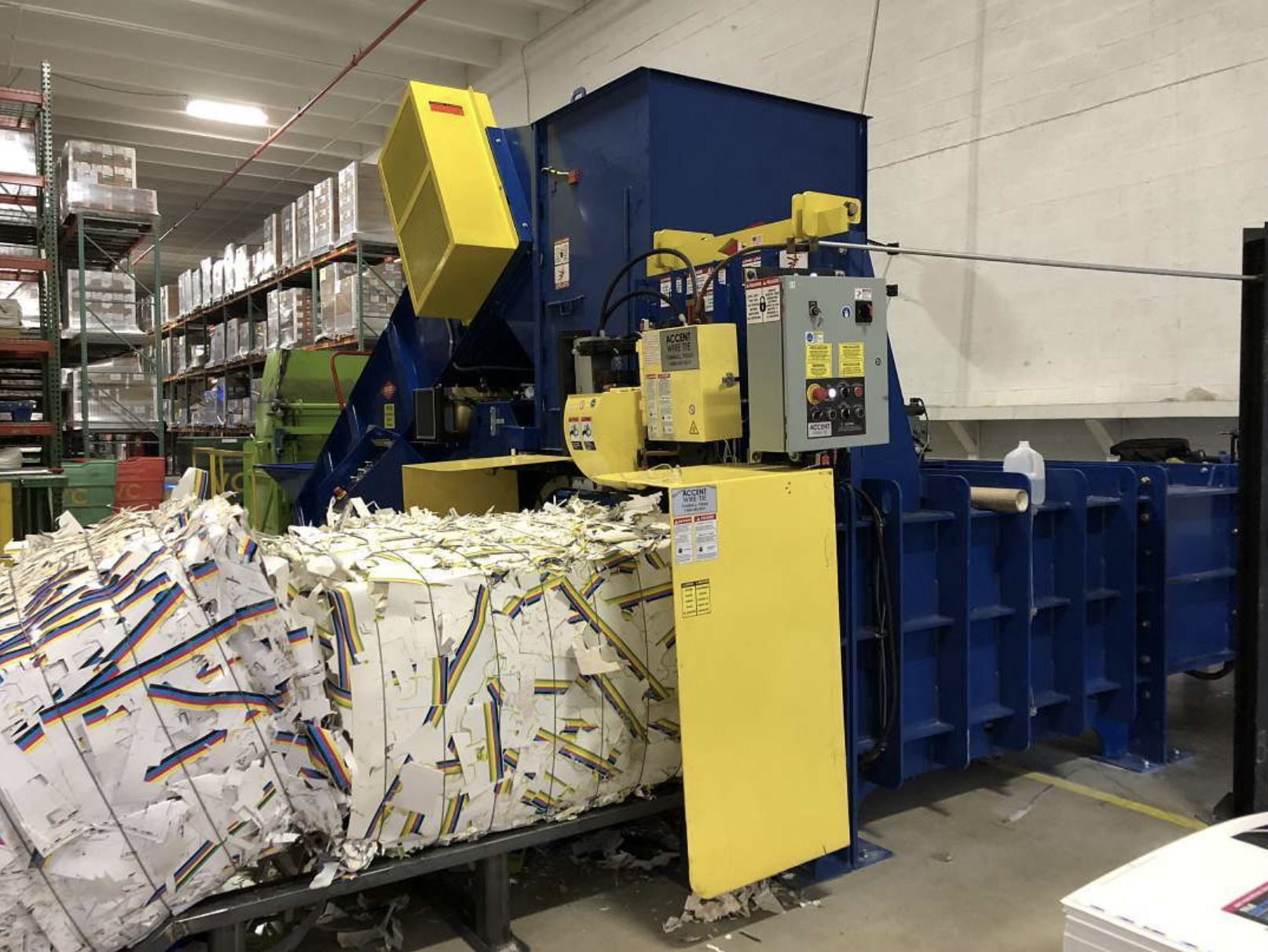
A horizontal auto-tie baler uses a single hydraulic ram that compresses material horizontally inside a chamber. Material is fed continuously through a top-loading hopper, the ram cycles to compact it into the extrusion chamber, and when the bale reaches the correct density or length, the machine automatically threads and ties the bale with wire - all without operator intervention per bale. The cycle then repeats.
The "auto-tie" function is the key labor advantage. Once the machine is running and the hopper is being fed - typically via conveyor - one person can manage a significant volume of material with minimal hands-on involvement per bale. This makes the horizontal auto-tie the most efficient machine for consistent, high-volume single-material streams.
Two-ram baler
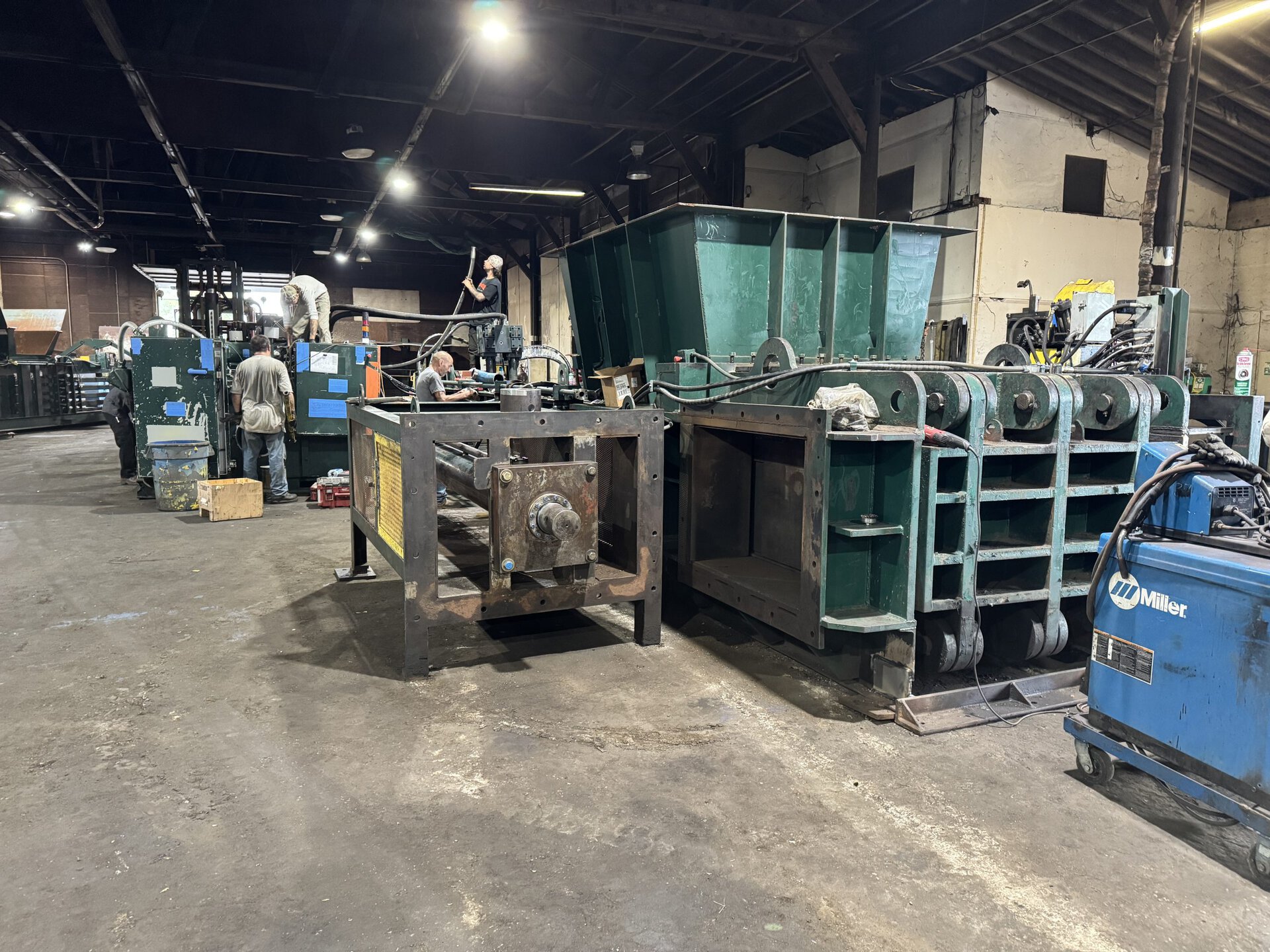
A two-ram baler uses two independent hydraulic cylinders arranged in an L-shaped configuration. The first ram - the main gatherer ram - pushes material into the bale chamber and compresses it against the chamber walls. The second ram - the eject ram - pushes the completed bale sideways out of the chamber to be tied and removed. Both rams work together to produce extremely dense, consistent bales.
The two-cylinder design gives the machine a significant advantage over a single-ram auto-tie. Most importantly, the main ram achieves 60% - 95% penetration into the bale chamber on every stroke - which means better material compression, less memory in difficult materials like plastics, and more consistent bale density with the ability to process a wide range of material types.
The Head-to-Head Comparison
| Factor | Horizontal auto-tie | Two-ram baler |
|---|---|---|
| Primary material | OCC, mixed paper, clean plastics - consistent streams | Mixed materials, OCC, plastics, film, non-ferrous metals - wide range |
| Bale density | High for OCC | Higher across all materials |
| Material flexibility | Best with consistent, predictable streams | Handles variability and bulky or difficult materials effectively |
| Throughput | 15 to 40+ tons per day on OCC | 20 to 80+ tons per day depending on configuration |
| Cylinder configuration | Single ram - typically 6" to 12" bore | Main + eject ram - main bore 8" to 16"+; more compaction force |
| Labor requirement | Low - auto-tie handles bale completion | Low to minimal with conveyor infeed; highly automated |
| Footprint | Significant - needs floor space and bale ejection clearance | Larger - L-shaped configuration requires more floor area |
| New machine cost | $150,000 - $300,000 | $240,000 - $400,000+ |
| Refurbished cost | $95,000 - $125,000 | $125,000 - $400,000 |
| Maintenance complexity | Moderate - single hydraulic system, wire tier | Higher - Remote power unit, more moving components |
| Best for | Distribution centers, box plants, consistent OCC operations | MRFs, mixed material operations |
Cylinder Configuration: Why It Matters in This Comparison
The cylinder difference between these two machine types is one of the most practically significant factors in the comparison.
A horizontal auto-tie baler uses a single ram with a cylinder bore typically ranging from 6 to 12 inches. That single cylinder compresses the material and ejects the bale. The ram force is determined by the cylinder bore and system pressure, and on most mid-size horizontal auto-tie machines it runs in the range of 150,000 to 250,000 lbs.
A two-ram baler has two separate cylinders. The main gatherer cylinder - which on two-ram machines commonly ranges from 8 to 16 inches in bore - applies all of its force exclusively to compressing the material. This means the two-ram's main cylinder can achieve 60% - 95% penetration into the bale chamber on every single stroke, compressing material against all four chamber walls rather than just pushing it forward.
Ram penetration is the reason two-ram balers handle difficult materials so much better than single-ram open end machines. Plastics and bulky materials that "spring back" against a single-ram compress more completely when the main ram works them against all four chamber walls. The result is denser bales, less material memory, and more consistent bale integrity across a wider range of inputs.
The practical implication: if your material stream is clean, consistent OCC or mixed paper, a well-sized horizontal auto-tie provides more than enough compaction force at lower cost. If your stream includes plastics or a range of mixed materials, the two-ram's cylinder configuration starts earning its premium on every bale.
Material Handling: Where Each Machine Wins and Loses
This is often the deciding factor. Both machines can process OCC. But as your material stream becomes more diverse or more difficult, the two machines diverge significantly.
Where the horizontal auto-tie excels
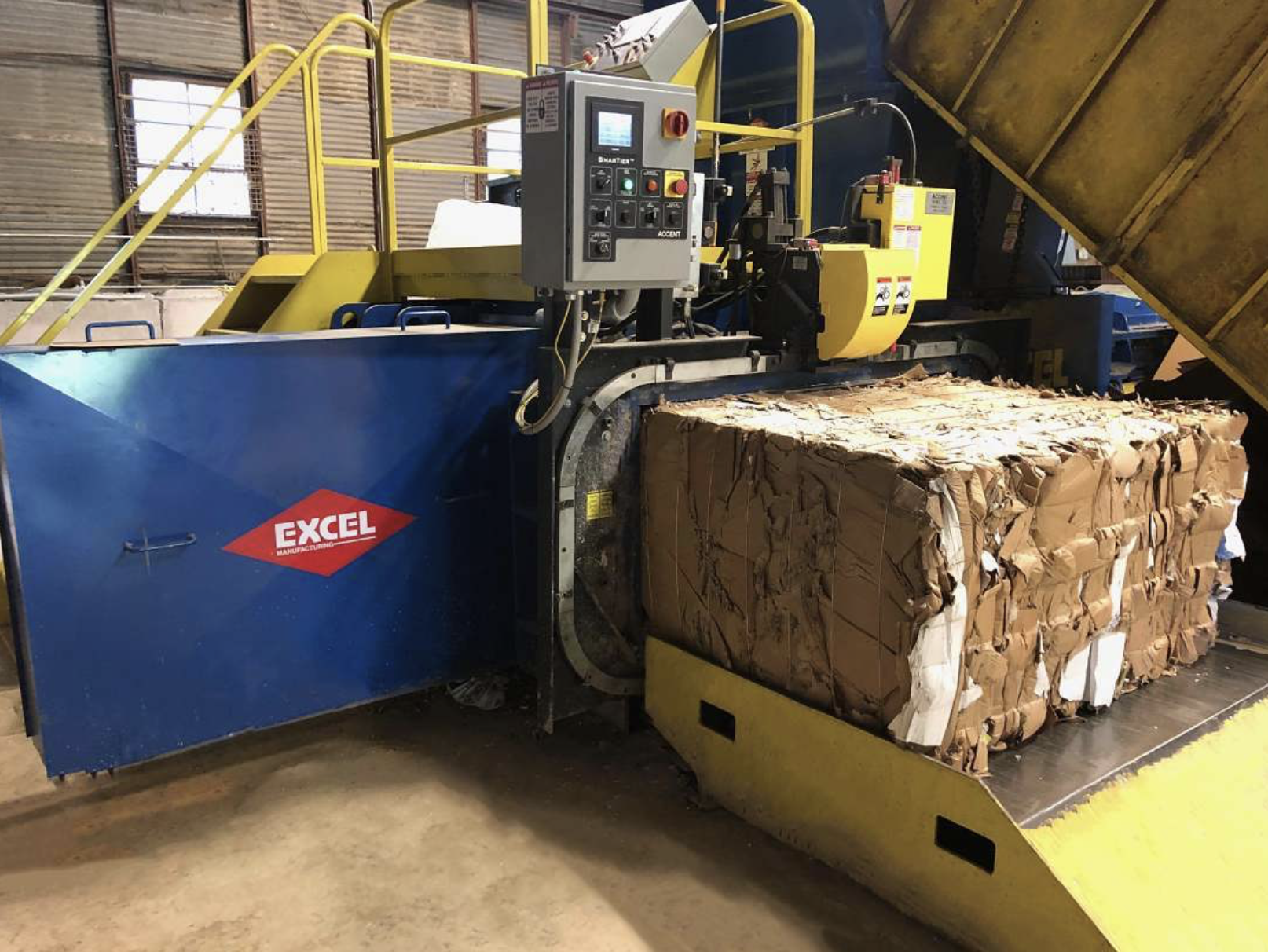
- Clean OCC at volume: This is what horizontal auto-tie balers were designed for. Consistent corrugated cardboard produces excellent bale density, reliable tier performance, and high throughput with minimal operator involvement.
- Mixed paper and newspaper: Fiber materials with predictable density and good compressibility are well matched to the horizontal auto-tie's single-ram design.
- PET plastic bottles: Clean, consistent PET at moderate volume bales well in most horizontal auto-tie configurations.
- Single-material operations: When your stream is one material type day in and day out, the horizontal auto-tie's consistency becomes an advantage - it is optimized for that stream and produces highly repeatable bales.
Where the horizontal auto-tie struggles
- Mixed material streams: When OCC, plastics, and other materials run together with varying densities, a single-ram machine has difficulty producing consistent bale quality across the mix.
- Bulky or oversized material: Large cardboard items, oversized boxes, or bulky plastics that don't break down easily are harder for single-ram machines to manage cleanly.
- Non-ferrous metals: Aluminum cans and light metals require significantly more compaction force than paper and cardboard. Standard horizontal auto-tie machines are not designed for metal baling.
Where the two-ram excels
- Mixed material streams: The two-ram's twin cylinder design, bale separation door, and larger chamber handle material variability without the consistency issues that affect single-ram machines.
- Plastic and difficult materials: Full ram penetration compresses film and other springy materials far more effectively than a single-ram machine.
- High-volume multi-material operations: MRFs and large recycling operations processing many material types benefit from the two-ram's flexibility to switch between materials quickly without retooling.
- Non-ferrous metals: Two-ram balers with appropriate cylinder size and chamber configuration handle aluminum, copper, and nonferrous metals that single-ram machines cannot.
Where the two-ram has limitations
- Higher upfront cost: The price premium is real - typically $75,000 to $150,000+ more than a comparable horizontal auto-tie, new or refurbished.
- Larger footprint: The L-shaped two-cylinder configuration requires significantly more floor space. This matters in facilities where space is constrained.
- More maintenance complexity: Hydraulic systems, more cylinders, and more moving components mean more to maintain. An in-house service capability or a reliable dealer service partner is more important with a two-ram than with a simpler auto-tie.
- Overkill for clean single-material streams: If you are baling exclusively clean OCC at moderate volume, you are paying for capacity and flexibility you will never use.
Operation Profiles: Which Machine Fits Which Facility
Here is how we think about the decision based on the operations we actually work with.
Choose a horizontal auto-tie if...
- Your primary material is OCC, mixed paper, or clean single-stream plastics
- Your daily volume runs 8 to 40 tons per day on a consistent material
- You are a distribution center, box plant, or warehouse with a predictable, single-material cardboard stream
- You want to minimize upfront cost while still achieving strong automation and throughput
- Your facility has floor space constraints that make the two-ram's L-shape configuration impractical
Choose a two-ram if...
- Your material stream is mixed - OCC plus plastics, film, nonferrous metals or other materials running together
- You are an MRF or large recycling operation processing 40+ tons per day across multiple material types
- You need to bale aluminum, non-ferrous metals, or other high-density materials a single-ram cannot handle
- Your operation needs flexibility to switch between materials without significant downtime or adjustment
- You are running a high-volume operation where the two-ram's throughput advantage - combined with conveyor infeed - justifies the higher upfront cost
The honest tiebreaker
When an operation is genuinely in the middle - volume is moderate, materials are mostly OCC with some plastics - the question comes down to where you expect to be in three to five years. If your volume is growing and your material mix is likely to diversify, the two-ram's flexibility will pay dividends you can't fully value today. If your operation is stable and your material stream is unlikely to change significantly, the horizontal auto-tie's lower cost and simpler maintenance profile is the right call.
Don't buy for what sounds impressive. Buy for what your operation actually needs - and will need.
Cost Comparison: The Full Picture
Sticker price is the starting point, not the full story. Here is how the two machines compare across total cost of ownership for a mid-size operation.
| Cost factor | Horizontal auto-tie | Two-ram baler |
|---|---|---|
| New machine price | $150,000 - $300,000 | $240,000 - $400,000+ |
| Refurbished price | $95,000 - $125,000 | $125,000 - $400,000 |
| Installation | $10,000 - $25,000 | $15,000 - $25,000+ |
| Annual maintenance | $4,000 - $10,000 | $6,000 - $18,000 |
| Floor reline (periodic) | $20,000 - $50,000 | $45,000 - $90,000 |
The two-ram costs more across every line item - but it also produces more revenue per ton on difficult materials. For a pure OCC operation, the horizontal auto-tie is almost always the better financial decision. For a mixed-material operation where switching commodities is common, the two-ram's higher cost can be recovered through it's effeciency over time.
For a detailed breakdown of two-ram baler pricing specifically, see our post: How Much Does a Two-Ram Baler Cost? A Complete Price Breakdown.
A Note on Refurbished Machines for Both Types
Both horizontal auto-tie and two-ram balers are available refurbished from dealers with in-house reconditioning capability - and both represent excellent value when the reconditioning was done properly.
The key differences in evaluating refurbished machines of each type:
- Horizontal auto-tie: The wire tier is the highest-wear component and the most important thing to assess. A rebuilt or replaced tier, verified through multiple test cycles, is non-negotiable. Also check floor condition, hydraulic system integrity, and control system age.
- Two-ram: Both cylinders - main and eject - need individual assessment. A scored main cylinder rod or leaking eject cylinder are significant cost items. The tier system, floor condition, and control system all apply here too, but cylinder condition is the critical starting point on a two-ram.
For guidance on evaluating new vs. refurbished vs. as-is equipment across both categories, see our full guide: New vs. Used vs. Refurbished Balers: How to Decide.
Frequently Asked Questions
A horizontal auto-tie baler uses a single ram to compress material and automatically ties the bale as it is ejected - ideal for consistent, single-material streams like OCC at moderate to high volume. A two-ram baler uses two independent cylinders - one to compress, one to eject - which gives it significantly more compaction force, greater material flexibility, and the ability to handle mixed or difficult streams that a single-ram machine cannot manage as effectively. The two-ram costs more but earns it back on mixed material operations through better bale density and wider material compatibility.
Choose a two-ram when your operation handles mixed materials including plastics, film, or non-ferrous metals alongside OCC; when you are processing 40 or more tons per day and need maximum throughput; when bale density is critical for commodity value; or when material variability makes a single-ram machine's consistency an issue. If your stream is primarily clean OCC at moderate volume, a horizontal auto-tie is likely more cost-effective.
Yes, significantly. New horizontal auto-tie balers typically range from $150,000 to $300,000. New two-ram balers start around $240,000 and commonly reach $400,000 or more for larger configurations. Refurbished horizontal auto-tie balers run $95,000 to $125,000 from a reputable dealer, while refurbished two-rams start around $125,000 and go higher depending on size and scope of reconditioning. The two-ram's higher cost is justified when your material stream and volume demand its capabilities.
Bottom Line
Match the machine to your material stream - not the other way around
Most operations know what they're baling. Start there. If your stream is consistent OCC or mixed paper at moderate to high volume, a horizontal auto-tie gives you automation, throughput, and strong bale quality at a lower cost and simpler maintenance profile. If your stream is mixed - plastics, film, metals alongside OCC - or you need maximum density on every bale for commodity value, the two-ram earns its premium.
HMS carries both machine types - new, refurbished, and as-is - and services both with our in-house team. If you're not sure which direction fits your operation, call us. We've had this conversation hundreds of times and we're happy to talk through your specific material stream and volume before you make any commitment.
Tell us what you're baling and how much - we'll tell you which machine actually makes sense.