A baler without a conveyor is like a production line with a bottleneck built in. Material still has to get from the dock to the baler hopper - and if that happens by hand, by fork truck, or by walking employees with armloads of cardboard, you are paying for it in labor every single shift. A baler infeed conveyor solves that problem. This guide covers how these systems work, the three main types HMS installs, what they cost new and used, above-ground versus in-ground installation, and how to figure out whether your operation needs one.
HMS designs, supplies, and installs custom baler infeed conveyor systems for any baler brand and any floor plan. We sell new & Refurbished Fluent and Hustler conveyor equipment and refurbish systems from Mayfran, Karl Schmidt, Endura-Veyor, and other manufacturers at our Wanatah, Indiana facility.
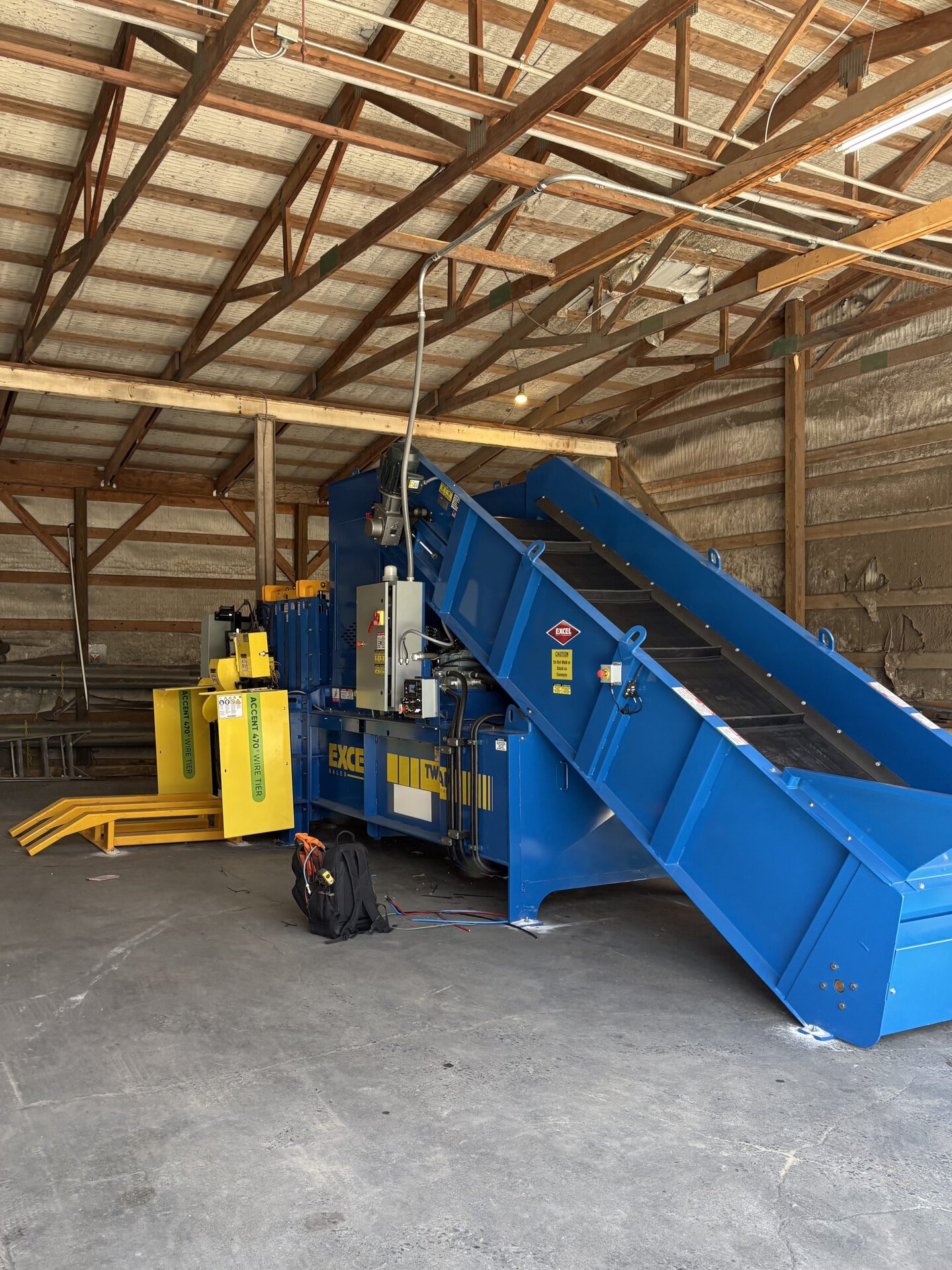
What a Baler Infeed Conveyor Actually Does
The job of a baler infeed conveyor is straightforward: move material from where it is generated or received to the baler hopper at a consistent rate that keeps the baler running near its optimal capacity. That sounds simple, but the engineering behind doing it well - the right belt type, the right width, the right incline angle, the right speed, above ground or in ground - has a real impact on baler performance, bale quality, and operating cost.
A well-designed infeed conveyor does several things simultaneously. It reduces or eliminates the labor of manually loading the baler hopper. It regulates material flow so the baler receives a consistent feed rather than irregular dumps that cause uneven bale density. It allows a single operator to manage a significantly higher volume of material per shift. And it removes the fork truck or manual handling from the immediate vicinity of the baler, which reduces congestion and safety risk on the production floor.
Baler manufacturers recommend sizing the machine at 2 to 3 times your actual required dock capacity. A baler running at a consistent, even feed rate through a properly designed conveyor system approaches that rated capacity far more reliably than one being manually loaded in irregular batches. The conveyor is what makes the baler perform the way it was spec-ed.
The conveyor and baler work as a system
HMS offers conveyor integration with every major baler manufacturer - Balemaster, Excel, Marathon, Harris, and others - as part of a turnkey system. The baler's hopper dimensions, feed opening width, and height above the floor drive the conveyor design. When HMS installs a conveyor alongside a baler, the two are commissioned and tested together as a complete system - not as separate pieces of equipment that happen to be near each other.
The Three Main Types HMS Installs
Not all baler infeed conveyors are the same machine. The right type depends on your material, your volume, your floor layout, and your baler. Here are the three configurations HMS installs most commonly.
1. Chain rubber combo infeed conveyor
The chain rubber combo conveyor uses a rubber belt surface riding on a roller chain drive system. This combination gives it the durability and pulling power of a chain-driven system with the gentler, material-friendly surface of a rubber belt. It is the most versatile option for general cardboard, mixed paper, and OCC applications - handling a range of material sizes and weights without the aggressive surface that can snag or shred lighter materials. The chain drive provides reliable pulling force on inclines, making it well suited to above-ground installations where the conveyor must lift material to reach the baler hopper height. HMS supplies chain rubber combo conveyors from Fluent and Hustler and builds custom-length configurations to fit each installation.
2. Steel belt infeed conveyor
The steel belt conveyor uses an interlocking steel belt - typically piano hinge or double-beaded construction - instead of rubber. Steel belt conveyors are significantly more durable than rubber belt systems and are the right choice for heavy, abrasive, or sharp materials that would damage a rubber surface over time. Scrap metal operations, shredder infeed, and facilities processing heavy industrial materials commonly use steel belt conveyors. They handle high material weights per linear foot and are less susceptible to puncture, tearing, or premature wear. The tradeoff is higher initial cost and slightly more involved maintenance than a rubber belt system.
3. Slider bed with cleat infeed conveyor
A slider bed conveyor rides on a flat steel pan rather than rollers, with cleats - raised cross-members on the belt surface - that grip and push material up the incline rather than relying solely on belt friction. The slider bed design is well suited to lightweight, loose, or difficult-to-control materials that tend to slip backward on a smooth incline - plastic film, OCC, shredded paper, and light mixed recyclables in particular. The cleats provide consistent material movement regardless of incline angle, which gives designers more flexibility in conveyor layout when floor space is constrained. Slider bed conveyors are generally lower maintenance than chain-driven systems and are a cost-effective choice when material weight is moderate and consistent belt loading can be maintained.
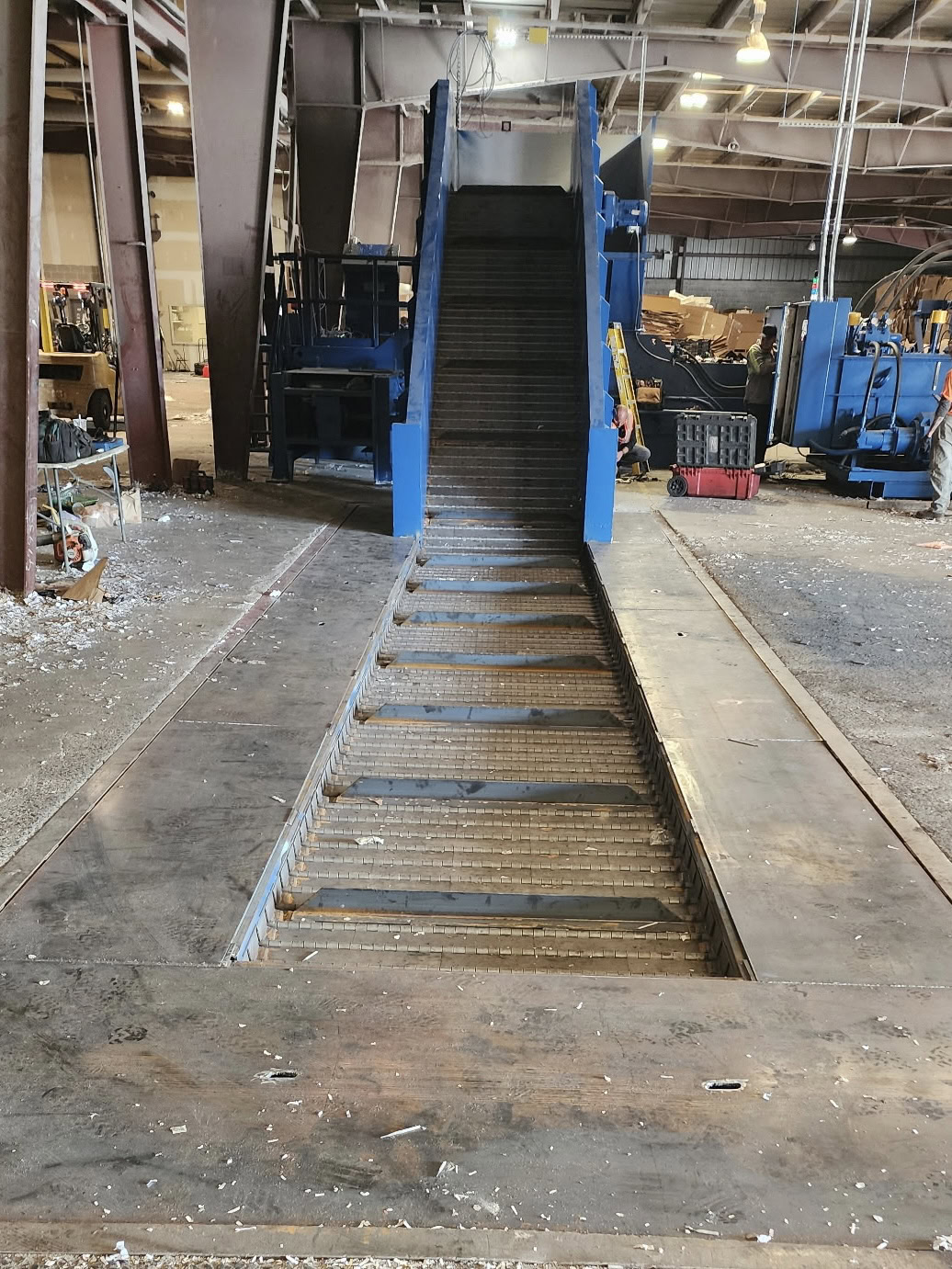
Above-Ground vs. In-Ground Installation
One of the most consequential decisions in a conveyor installation is whether the system runs above the floor on a structural frame or recessed into a pit below floor level. Both are common - HMS installs both regularly - and the right choice depends on your facility, your operation, and your material handling workflow.
Above-ground
The conveyor frame sits at or near floor level and angles upward to reach the baler hopper. Requires no floor modification or concrete work. Material is loaded from the side or end of the conveyor - typically by fork truck or from an elevated dump position. Takes up more floor space and may require a loading platform or elevated material delivery point. Faster to install and lower upfront cost than in-ground. Best when floor modification is not practical or budget is a constraint.
In-ground
The conveyor is recessed into a pit cut into the facility floor, with the belt surface running at or near floor level at the loading end. Material - particularly cardboard from a dock or processing area - can be pushed or fork-trucked directly onto the conveyor at floor level. Produces a cleaner facility layout, reduces fork truck maneuvering, and often improves material flow. Requires concrete saw cutting, excavation, and pit construction before conveyor installation. Higher upfront cost but frequently preferred in new construction or major facility renovations. Best when workflow and long-term efficiency justify the additional site work.
The choice between above-ground and in-ground is not purely a cost decision - it is a workflow decision. An in-ground conveyor that fits your material handling process can outperform a above-ground installation that creates friction in your daily operation. HMS evaluates both options with every customer before recommending a configuration.
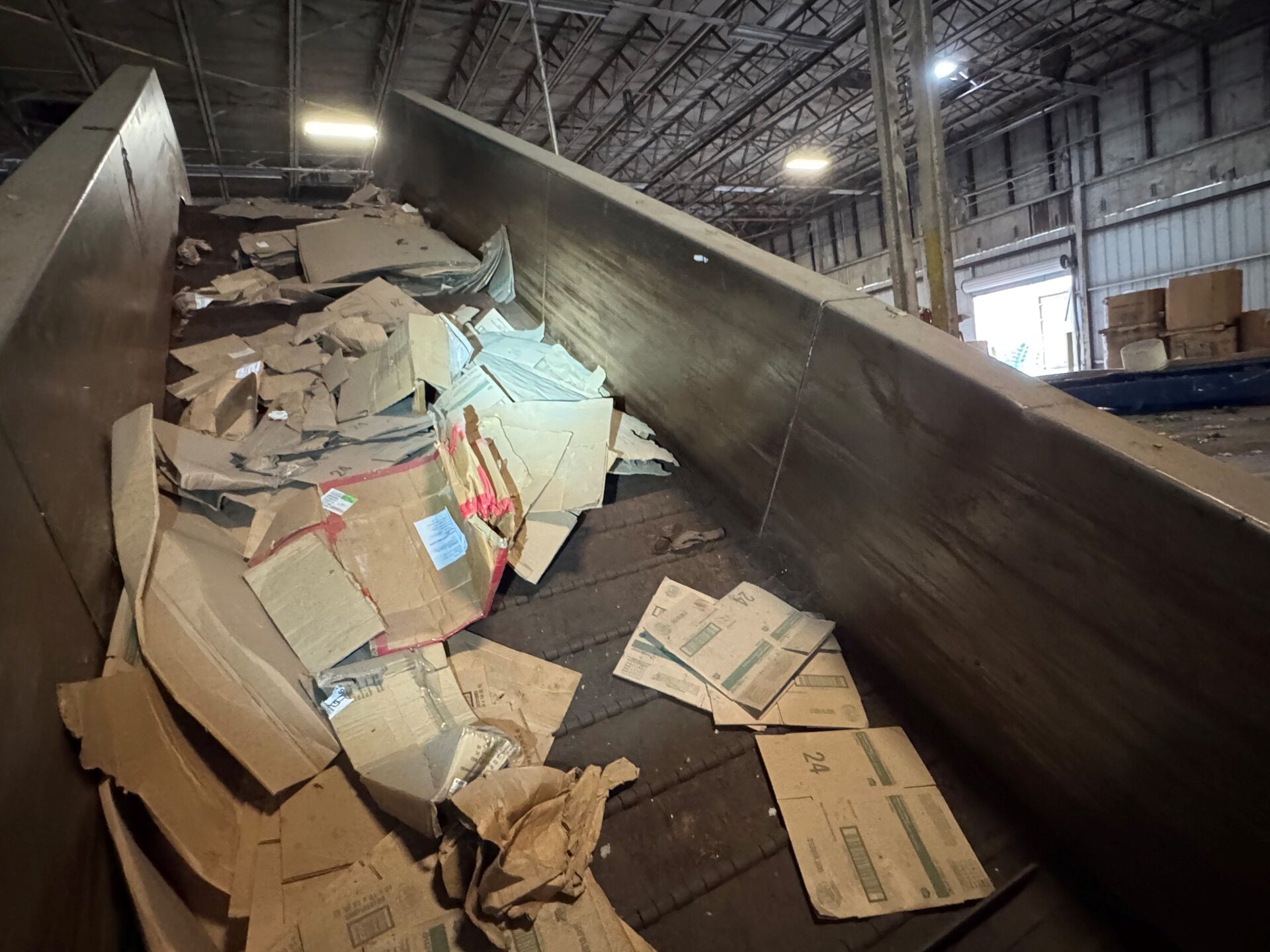
What a Baler Infeed Conveyor Costs
Conveyor cost varies significantly based on type, length, drive configuration, belt material, and whether the system is new, refurbished, or used. Here is what HMS buyers typically see across each category.
Used baler infeed conveyor
Used conveyors are sold as-is with no belt replacement or mechanical rebuild. Condition varies widely - inspect the belt, drive components, frame, and electrical carefully before purchasing. Used conveyors are best suited to operations with in-house mechanical capability or a reliable service partner. Faster to obtain than new or refurbished, and significantly lower upfront cost. Pre-purchase inspection is strongly recommended.
HMS refurbished conveyor - with new belt
HMS refurbishes conveyor systems from Hustler, Fluent, Mayfran, Karl Schmidt, Endura-Veyor, and other manufacturers at our Wanatah, Indiana facility. Every refurbished conveyor receives a brand new belt along with mechanical & structural inspection and service. The new belt is the most important component - it is what actually moves your material and what wears fastest in service. A refurbished conveyor with a new belt from HMS delivers reliable performance at a meaningful discount from new. Backed by a limited HMS dealer warranty.
New custom conveyor system
New conveyor systems custom-built to your floor plan, are priced based on total system length, conveyor type, drive configuration, controls integration, and installation scope. Virtually every HMS conveyor installation is custom - there are no off-the-shelf runs that fit every baler and every facility. The price range reflects systems from a single moderate-length infeed run to more complex multi-section systems with controls integration and above-ground or in-ground site work. Full manufacturer warranty and installation by HMS's own team.
Conveyor cost is often underestimated when buyers budget for a baler purchase. If a conveyor infeed is part of your planned installation, factor it into your total system budget from the start - not as an afterthought. A baler purchase and conveyor installation planned together produces a better system at lower total cost than retrofitting a conveyor to a baler that was installed without one.
Brands HMS Carries
HMS sells new conveyor systems from two manufacturers and refurbishes systems from several others.
- Fluent Conveyors — custom and standard conveyor systems across a full range of types including heavy-duty roller chain belt, slider bed, and recycling sort systems. Fluent builds to order and to spec, which aligns with HMS's approach of designing every installation to the customer's specific floor plan and requirements.
- Hustler Conveyor — over 60 years serving the recycling and scrap industries. Hustler manufactures steel belt, roller chain, flat slider, and metering conveyors specifically for recycling, scrap metal, and baler feed applications.
- Mayfran, Karl Schmidt, Endura-Veyor — all also refurbished at HMS's Wanatah facility. These are common brands in the used market and HMS has service experience across all three platforms. Every refurbished unit receives a new belt before shipping.
Do You Actually Need a Conveyor?
Not every baler installation requires a conveyor. Some smaller operations load balers manually or by fork truck without inefficiency. But for most operations generating significant daily volume, the question is not whether a conveyor pays for itself - it is how quickly.
You likely need a conveyor if
- Your operation generates 5 or more tons of material per day and employees are currently hand-loading the baler hopper
- Your baler is running below rated capacity because material feed is inconsistent - operators can not keep up with the machine's cycle speed
- Fork truck traffic in the baler area creates congestion, safety concerns, or productivity bottlenecks during peak receiving hours
- You are upgrading from a vertical baler or manual-tie machine to a horizontal auto-tie - the higher throughput of the new machine requires a consistent material feed to realize its full capacity
- Your bale density is inconsistent and you suspect uneven hopper loading is the cause - a conveyor delivering a steady material head in the feed chute produces more consistent bales
A conveyor may not be necessary if
- Your volume is low enough that manual or fork truck loading is efficient and your labor cost per ton is acceptable
- Your facility layout makes conveyor installation impractical and the workflow cost of the workaround is manageable
- You are operating a vertical baler or small horizontal machine at low volume where the ROI on conveyor installation does not close in a reasonable timeframe
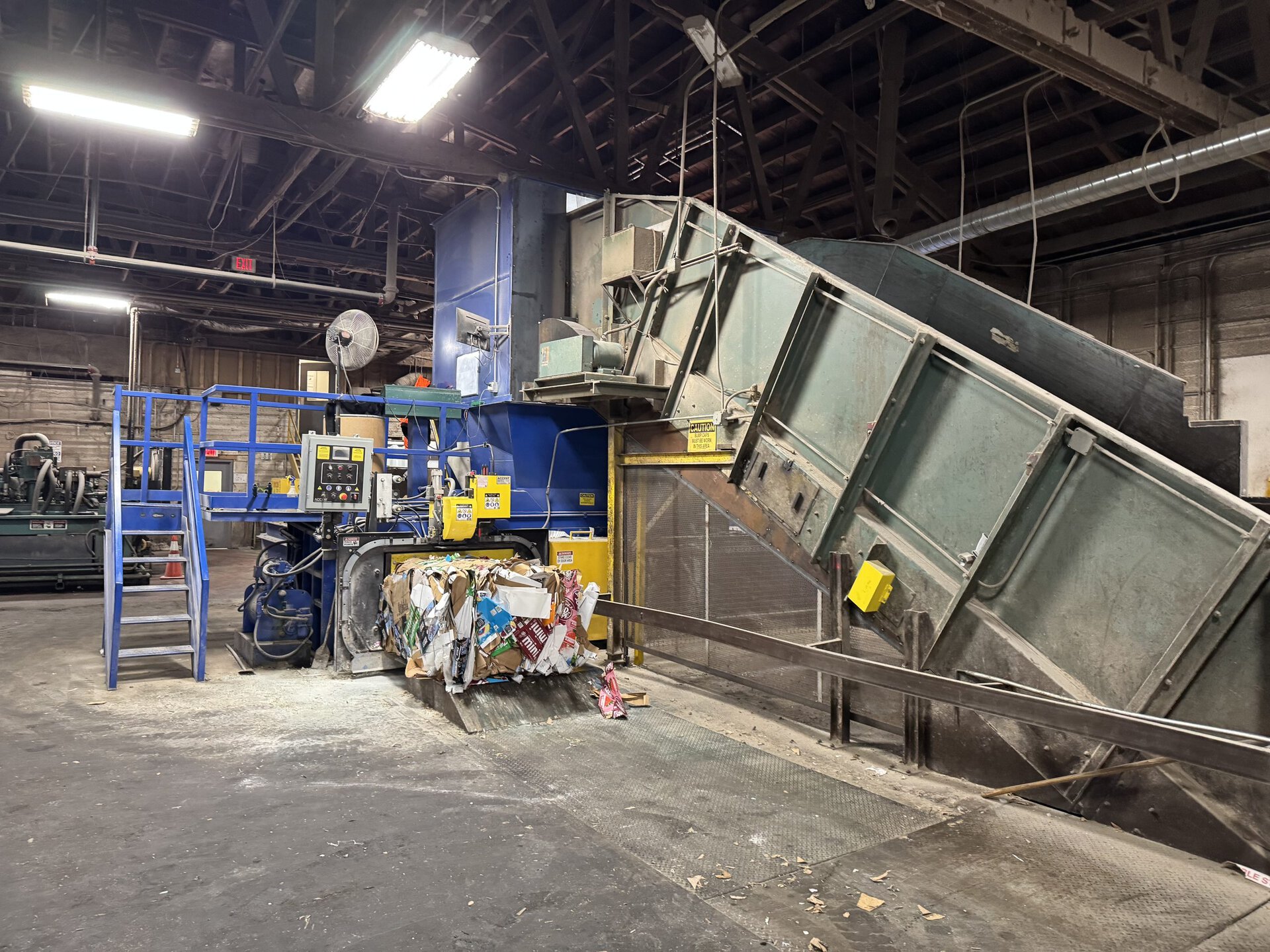
How HMS Designs and Installs Conveyor Systems
Every HMS conveyor installation starts with the customer's floor plan - not a catalog. Baler infeed conveyors are not a product you pick off a shelf. The right system depends on your baler model and hopper height, your facility layout and available floor space, your material type and daily volume, whether above-ground or in-ground installation fits your workflow, and your electrical service and controls requirements.
HMS handles the full process - design, supply, installation, and commissioning - using our own team. We do not hand the conveyor work off to a third-party contractor. The same team that sold and installed your baler designs the conveyor system that feeds it, which means a single point of accountability from the material loading point to the finished bale.
Planning a baler purchase? Design the conveyor at the same time.
The most common mistake we see is buyers who purchase a baler, install it, and then try to retrofit a conveyor six months later when they realize they need one. Planning the conveyor alongside the baler purchase produces a better-integrated system, avoids costly site rework, and gets the conveyor specified correctly for the baler's hopper dimensions from day one.
Call HMS at (219) 733-2108 when you are evaluating a baler purchase - we will include conveyor design in the conversation from the start.
Frequently Asked Questions
Baler infeed conveyor costs depend on whether you are buying new, refurbished, or used and the type and length of the system. Used conveyors from HMS typically run $30,000 to $60,000. Refurbished conveyors with a brand new belt run $80,000 to $115,000. New custom conveyor systems from Fluent or Hustler, designed and installed to your floor plan, typically range from $150,000 to $275,000. HMS designs and installs custom baler infeed conveyors for any floor plan and any baler brand.
The three most common baler infeed conveyor types HMS installs are chain rubber combo infeed conveyors, steel belt infeed conveyors, and slider bed with cleat infeed conveyors. Each has different strengths depending on your material type, volume, and baler configuration. HMS designs every conveyor system custom to the customer's floor plan - above-ground or in-ground depending on facility requirements.
Not every baler requires a conveyor, but most high-volume operations benefit significantly from one. A conveyor infeed eliminates manual loading of the baler hopper, reduces labor cost per ton, enables consistent material flow that improves bale density, and allows one operator to manage a much higher volume of material per shift. Operations generating 5 or more tons of material per day typically see a strong return on conveyor infeed investment.
An above-ground conveyor sits on a structural frame and angles up to feed the baler hopper - no floor modification required, lower upfront cost. An in-ground conveyor is recessed into a pit cut into the facility floor, allowing material to be loaded at or near floor level - which simplifies fork truck operation and often produces a cleaner facility layout but requires concrete work and a higher upfront investment. HMS installs both and designs the system to your specific floor plan and operational requirements.
Bottom Line
The conveyor is what makes the baler perform the way it was spec-ed
A horizontal auto-tie or two-ram baler running at 60 percent capacity because material feed is inconsistent is not performing the way it was purchased to perform. A properly designed infeed conveyor solves that problem - and pays for itself in labor savings, improved bale density, and higher commodity revenue over time.
HMS designs and installs custom baler infeed conveyor systems for any baler brand and any facility layout. New & refurbished systems from Fluent and Hustler. Refurbished systems with new belts from Mayfran, Karl Schmidt, Endura-Veyor, and others. Above-ground or in-ground. Chain rubber, steel belt, or slider bed with cleat. Call us and we will design the right system for your operation.
Ready to talk through your conveyor project? Our team will design the right system for your floor plan and baler.