Paper is one of the most valuable recycling commodities - and one of the most varied. A bale of sorted white ledger is worth far more per ton than a bale of mixed paper, and the difference between capturing that value and losing it often comes down to the baler you run and how cleanly it produces bales by grade. Printers, paper mills, document destruction operations, and recycling facilities all generate paper worth baling. The right machine turns that paper into mill-ready revenue. This guide covers which machine fits which operation.
HMS sells new Balemaster and Excel paper balers, refurbishes machines from all major brands, and installs and services every machine we sell with our own team. We are not tied to one manufacturer or one machine type - which means we can recommend the baler that actually fits your paper stream and your floor plan.
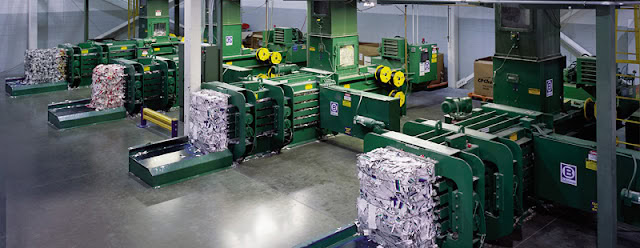
The Paper Grades That Get Baled
Unlike corrugated, which is essentially one commodity (OCC), paper spans a wide range of grades with very different values. Understanding what you generate is the first step to choosing the right baler, because grade mix affects both the machine you need and how you should run it.
- High grades and sorted white ledger. The most valuable paper grades. Clean, sorted office paper, white ledger, and computer printout command the highest prices per ton. Operations generating these grades have the most to gain from clean, well-separated baling.
- Office paper and mixed office waste. Common in office buildings, business parks, and document operations. Lower value than sorted high grades but still a worthwhile commodity when baled cleanly.
- Newsprint and news. Generated by printers, publishers, and recyclers. Consistent material that bales predictably and has a steady market.
- Magazine and coated stock. Heavier coated papers from printing and publishing operations. Bales densely and has its own market grade.
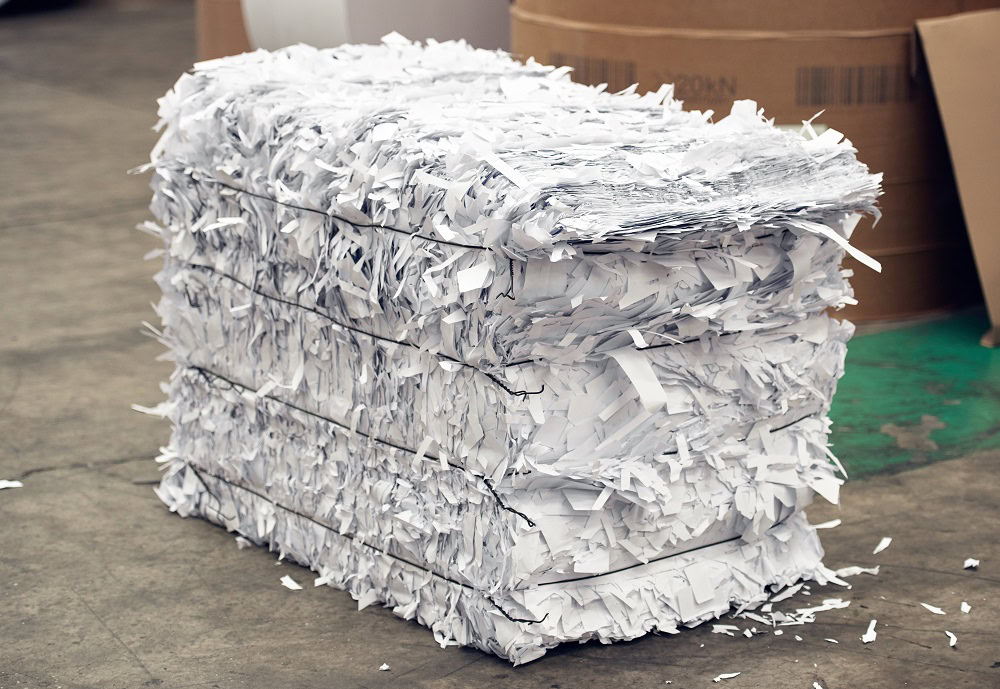
- Shredded paper. From document destruction and office shredding. Loose and lightweight, which makes it harder to bale cleanly and calls for the right machine choice.
- Mixed paper. The catch-all lower grade. Worth baling, but the lowest value - which is exactly why keeping higher grades out of it matters.
The single most important thing to understand about baling paper: grade value varies dramatically. Sorted white ledger can be worth several times what mixed paper brings. A bale contaminated with lower grades gets downgraded to the lowest grade it contains. That makes clean, grade-separated baling far more important for paper than it is for OCC - and it is where the right baler earns its keep.
Which Paper Baler Fits Your Operation
As with any baler, volume drives the machine selection - but for paper, grade mix and material behavior matter too. Here is how HMS approaches it.
Vertical baler
For small print shops and operations generating modest paper volume, a vertical baler is a practical, low-cost starting point. Compact footprint, simple operation, and bales that are manually tied. Well suited to operations where paper is a steady but secondary stream and floor space is limited.
Horizontal auto-tie baler (Balemaster E-Series)
For printers, paper converters, and recyclers generating consistent paper volume, a horizontal auto-tie baler is the workhorse. The Balemaster E-Series in particular is exceptionally well suited to paper - it was built for this kind of application. The automatic tie cycle eliminates hand-tying labor, and continuous feed lets one operator manage high volumes while producing clean, dense, grade-separated bales. This is the most common paper baler at printing operations and paper recyclers.
Horizontal auto-tie baler (Balemaster EO-Series)
For high-volume paper operations - large printers, paper mills, and high-throughput recyclers - the Balemaster EO-Series steps up with an oversized hopper and larger bales. The bigger bale chamber and higher ram thrust produce heavier, denser paper bales that maximize freight efficiency and mill value. When paper volume is high and continuous, the EO-Series delivers the throughput.
Excel 2R63D two-ram or EX63 horizontal
Some paper streams are simply harder to bale - mixed, bulky, or difficult material that does not feed cleanly through a standard paper baler. For these tougher-to-bale waste paper applications, some operations use an Excel 2R63D two-ram baler or an Excel EX63 horizontal baler. The 2R63D brings full platen penetration and the flexibility of a two-ram in a compact footprint, while the EX63 offers a closed-end horizontal design that handles demanding material well. HMS carries both and can advise when a tougher paper stream calls for one of these instead of a standard auto-tie.
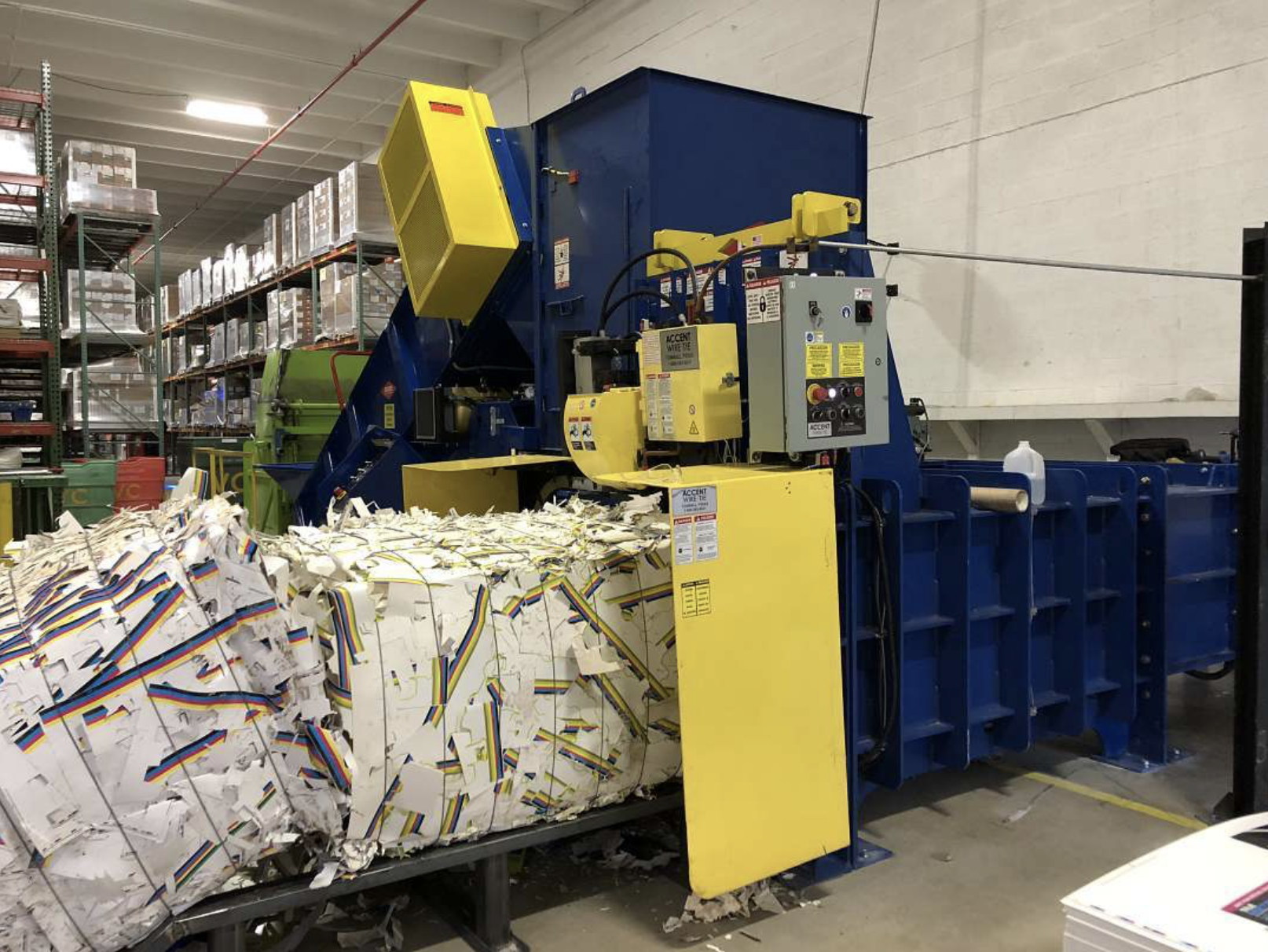
Balemaster Paper Balers: E-Series and EO-Series
HMS is an authorized Balemaster dealer. Balemaster - based in Crown Point, Indiana, about 30 miles from our Wanatah facility - builds horizontal auto-tie balers that are a benchmark for paper baling specifically. The E-Series and EO-Series cover the full range of paper volumes and grades.
The E-Series is the Balemaster line most associated with paper. It produces a 30-inch wide bale and is purpose-built for the kind of consistent paper and high-grade material that printers, paper converters, envelope plants, and document operations generate. Horsepower ranges from 20HP to 150HP with cylinder options to match throughput. On paper grades, E-Series machines produce bale weights ranging from roughly 1,100 pounds on lighter grades up to 1,900 pounds on magazine and heavier stock, at densities from about 28 to 38 pounds per cubic foot depending on grade. The model number encodes throughput - adding a zero gives cubic feet per hour of dry capacity, so an E-710 moves 7,100 cubic feet per hour. For most paper operations, the E-Series is the natural fit, and it is also the best Balemaster choice for shredded paper applications.
The EO-Series uses an oversized hopper and produces larger bales - up to 48 inches wide by 40 inches tall - for high-volume paper operations. Feed chutes run up to 75 inches long and cylinder options run from 8 inches up to 12 inches for maximum bale density. For large printing operations, paper mills, and high-throughput recyclers handling significant paper volume, the EO-Series produces the heavier, denser bales that maximize mill value and freight economics. The same Balemaster model-number capacity system applies across the EO line.
Balemaster's model number tells you the capacity: add a zero to get cubic feet per hour of dry throughput. An E-980 moves 9,800 cubic feet per hour; an EO-1760 moves 17,600. When you are comparing models for a paper application, this gives you a fast way to match machine throughput to your paper volume.
Why Grade Separation Maximizes Your Revenue
This is the part of paper baling that operations most often leave money on. Because paper grades vary so much in value, how cleanly you separate and bale them directly determines what you earn.
- A contaminated bale drops to its lowest grade. Mix sorted white ledger with newsprint and mixed paper, and the whole bale gets priced as the lowest grade present. The premium value of the high grade is lost. Keeping grades separate preserves the value of each.
- Consistency builds mill relationships. Mills pay better and buy more reliably from operations that deliver consistent, clean, properly graded bales. A baler that produces predictable, well-formed bales by grade makes you a better supplier.
- Bale weight and density still matter. As with any commodity, heavier and denser bales mean more material per truckload, fewer pickups, and better freight economics. A quality paper baler delivers density along with grade consistency.
The takeaway: with paper, the baler is not just a compaction tool - it is part of how you protect the value of a varied, high-value commodity. A machine that produces clean, dense, grade-separated bales pays you back in revenue you would otherwise lose to downgrading.
Who Buys Paper Balers
- Commercial printers and print shops - generate paper trim, makeready waste, and off-spec stock. The E-Series is the classic fit, and tougher streams sometimes call for an Excel 2R63D or EX63.
- Paper mills and converters - generate high volumes of trim, broke, and process waste. High-volume EO-Series machines handle the throughput.
- Document destruction and shredding operations - generate shredded paper that bales best on a Balemaster E-Series.
- Office buildings and business parks - generate office paper and high grades worth baling cleanly to capture their premium value.
- Paper recyclers and MRFs - process multiple paper grades and need machines that produce clean, grade-separated bales at volume.
- Mailing houses and envelope plants - generate consistent paper waste well suited to E-Series baling.
What a Paper Baler Costs
| Machine type | New | HMS Refurbished | Best for |
|---|---|---|---|
| Vertical baler | $15,000 - $40,000 | $8,000 - $20,000 | Small print shops, low volume |
| Horizontal closed-door / manual-tie | $100,000 - $180,000 | $50,000 - $90,000 | Lower-volume paper operations |
| Horizontal auto-tie | $185,000 - $300,000 | $95,000 - $125,000 | Printers, converters, recyclers |
| Two-ram | $240,000 - $400,000+ | $125,000 - $400,000 | Tougher-to-bale or mixed paper |
Financing available - approvals in as little as 24 hours
HMS works with equipment lenders for qualified buyers on new and refurbished paper balers. New equipment qualifies for Section 179 tax deduction in the year of purchase - which can significantly improve first-year payback on a paper baling investment.
Call (219) 733-2108 or contact us online for a quote on the right paper baler for your operation.
One Dealer, Not One Solution
Here is what sets HMS apart for a paper operation trying to choose a machine: we are not locked into a single product line. With access to multiple product lines and our own refurbishing shop, we are free to recommend whatever genuinely fits - new or rebuilt, one brand or another. That freedom is the whole point: the best machine for a paper operation is the one matched to your throughput and bale requirements, and we are not boxed into a single answer.
We sell new Balemaster horizontal auto-tie balers, new Excel two-ram and horizontal balers, and we refurbish machines from every major brand in-house at our Wanatah, Indiana facility. That breadth means when you call us about a paper baler, the recommendation you get is based on your material, your volume, and your floor plan - not on what we happen to have to sell. If the E-Series is right, we will tell you. If your tougher paper stream calls for an Excel 2R63D, we will tell you that instead. And if a refurbished machine makes more sense for your budget than a new one, we will say so.
HMS sells, installs, and services every machine with our own team. One company, accountable from the recommendation through the installation and for the life of the machine. That is the advantage of working with a dealer that is not tied to one solution.
The right paper baler depends on your grades, your volume, and your layout - not on which brand a salesperson is trying to move. HMS carries multiple lines specifically so we can match the machine to the operation. Tell us what you generate and we will recommend what actually fits.
Frequently Asked Questions
The best paper baler depends on your volume and the paper grades you handle. For printers, paper converters, and moderate-volume operations, a Balemaster E-Series horizontal auto-tie baler is an excellent fit and is widely used for high grades, office paper, and newsprint. Higher-volume operations benefit from the larger Balemaster EO-Series. Some operations also use an Excel 2R63D two-ram or EX63 horizontal baler for tougher-to-bale waste paper. HMS sells, installs, and services all of these and helps match the right machine to your paper stream.
Paper baler costs vary by type. New horizontal auto-tie balers range from $185,000 to $300,000. Refurbished horizontal auto-tie balers from HMS run $95,000 to $125,000. Refurbished horizontal manual-tie and closed-door balers run $50,000 to $90,000. Vertical balers for very low volume start around $15,000 to $40,000. HMS sells new Balemaster and Excel paper balers and refurbishes machines from all major brands at our Wanatah, Indiana facility.
Paper grades vary significantly in commodity value. Sorted white ledger and other high grades are worth substantially more per ton than mixed paper or newsprint. Keeping grades separated and baling them cleanly preserves that value - a contaminated or mixed-grade bale gets downgraded to the lowest grade it contains. A baler that produces clean, consistent, well-separated bales by grade maximizes the revenue you capture from your paper stream.
Shredded paper is loose and behaves differently than whole sheets, which makes it harder to bale cleanly. The Balemaster E-Series is typically the best choice for shredded paper applications. Its design handles the lighter, looser material well and produces consistent, dense bales. HMS can help operations baling shredded paper from document destruction or office settings spec the right machine.
Bottom Line
Match the machine to your grades, your volume, and your layout
Paper is a high-value, highly varied commodity - and the baler you run determines how much of that value you actually capture. For most printers, converters, and recyclers, a Balemaster E-Series is the natural fit. High-volume operations step up to the EO-Series. Tougher paper streams sometimes call for an Excel 2R63D or EX63. And across all of them, clean, dense, grade-separated baling is what protects the premium value of high grades and maximizes your revenue per ton.
HMS sells, installs, and services all of these - and because we carry multiple lines, we can recommend the one that actually fits your operation rather than the one we are tied to. Tell us what you generate and how your floor is laid out, and we will spec the right machine. Call us or request a quote online.
Tell us your paper grades, volume, and floor layout - we will recommend the right machine and give you a straight quote.