A box plant never stops making scrap. Every corrugator run, every converting line, every die cutter produces trim - continuously, all shift, every shift. That trim is clean, high-value OCC, and the equipment that handles it determines whether it flows smoothly into mill-ready revenue or piles up as a bottleneck. This guide covers the recycling equipment that keeps a box plant running: the horizontal balers built for continuous trim, the shredders that handle volume reduction and product destruction, and how the two work together as a system.
HMS sells new Balemaster balers and industrial shredders, refurbishes machines from all major brands at our Wanatah, Indiana facility, and ties new and refurbished equipment into existing plant air systems. We work with box plants and sheet plants of every size across Indiana, Tennessee, and North America.
What Makes Box Plant Recycling Different
Box plants are not like distribution centers or recycling facilities, where material arrives in batches and gets baled when someone feeds the machine. In a box plant, scrap generation is continuous and tied directly to production. Corrugator trim, die cut scrap, slotter waste, and converting broke flow constantly - and most plants move that trim from the production equipment to the baler through an air conveyance system rather than by hand or fork truck.
That changes the equipment requirements in three ways:
- The baler must accept continuous feed. Material arrives from the air system all shift long. The baler needs a charging chamber and cycle speed matched to the plant's trim rate, with enough capacity headroom that a production surge does not back material up into the air system.
- The baler must integrate with the air system. The air conveyance discharge feeds the baler's chute or hopper. Hopper configuration, chamber volume, and the physical layout all have to work with where and how the air system delivers material.
- Uptime is production-critical. When the baler goes down in a box plant, trim has nowhere to go - and that can slow or stop converting lines. Reliability and fast service response matter more here than in almost any other baling application.
Box plant trim is some of the cleanest, most valuable OCC there is - consistent, dry, and uncontaminated. A properly sized baler system converts it into dense, mill-spec bales continuously with almost no labor. Few operations have a better ratio of commodity value to handling effort, which is why the equipment decision deserves real attention.
The Balers Box Plants Run
Three machine types cover nearly every box plant and sheet plant, and the right one depends on trim volume and - more than most buyers expect - on the plant's air system layout.
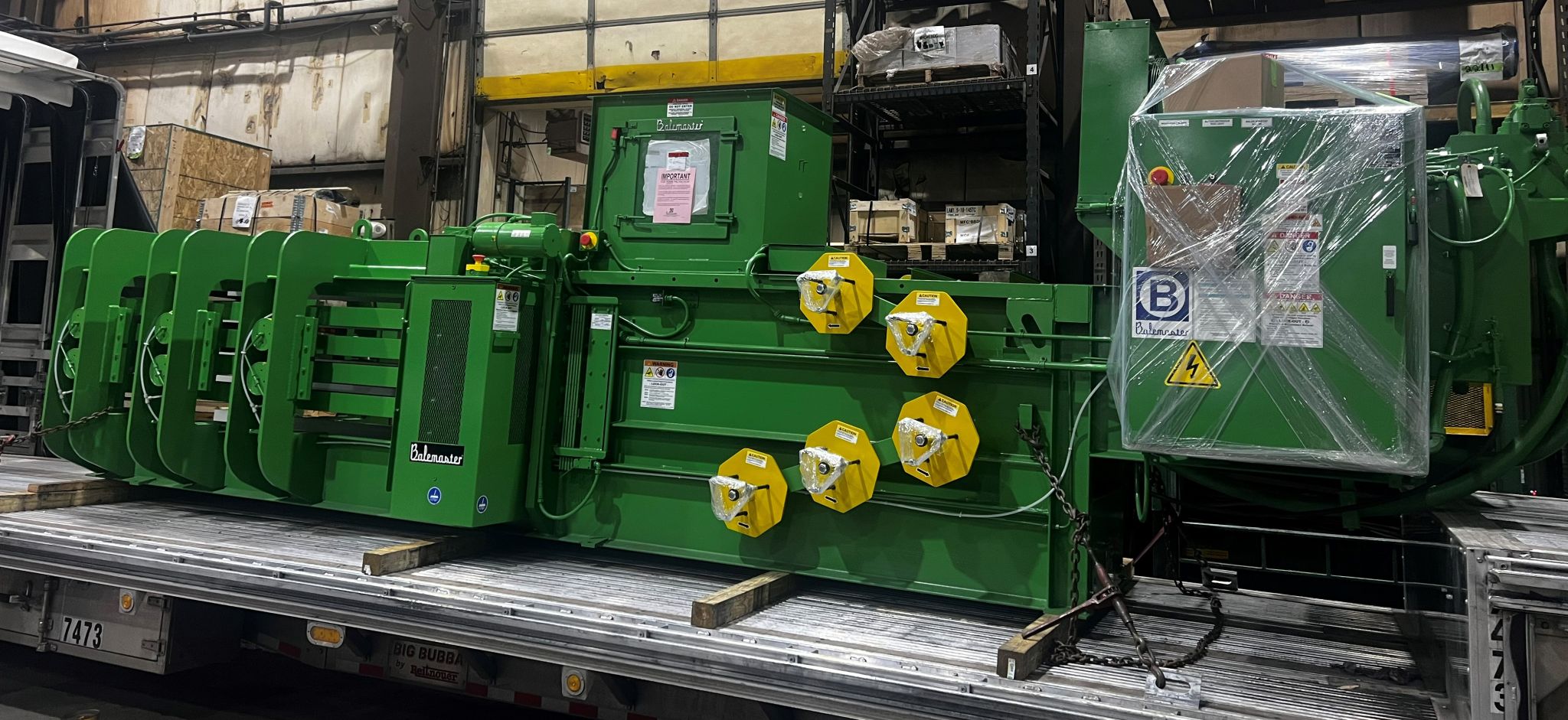
The Balemaster E-Series is the machine a large share of box plants run, across every plant size. It was built for exactly this application: continuous trim fed from an air conveyance system into a horizontal auto-tie baler that produces dense bales with an automatic tie cycle of roughly 25 seconds. Horsepower options from 20HP to 150HP let the machine be sized to the plant's trim rate, and the model number encodes capacity - adding a zero gives cubic feet per hour of dry throughput, so an E-980 moves 9,800 cubic feet per hour. On corrugated, E-Series machines produce bale weights of roughly 1,100 to 1,700 pounds at densities of 25 to 32 pounds per cubic foot. For most box plants, this is the default answer.
Small to medium box plants and sheet plants with lower trim volumes often run a horizontal closed-door baler instead. The closed-door design produces solid, mill-acceptable OCC bales at a meaningfully lower price point than a full auto-tie system - the tradeoff is that bales are tied manually. At lower trim volumes that labor is manageable, and the savings on the machine are real. Refurbished closed-door balers from HMS run $50,000 to $90,000, which makes them one of the most cost-effective entry points into box plant baling.
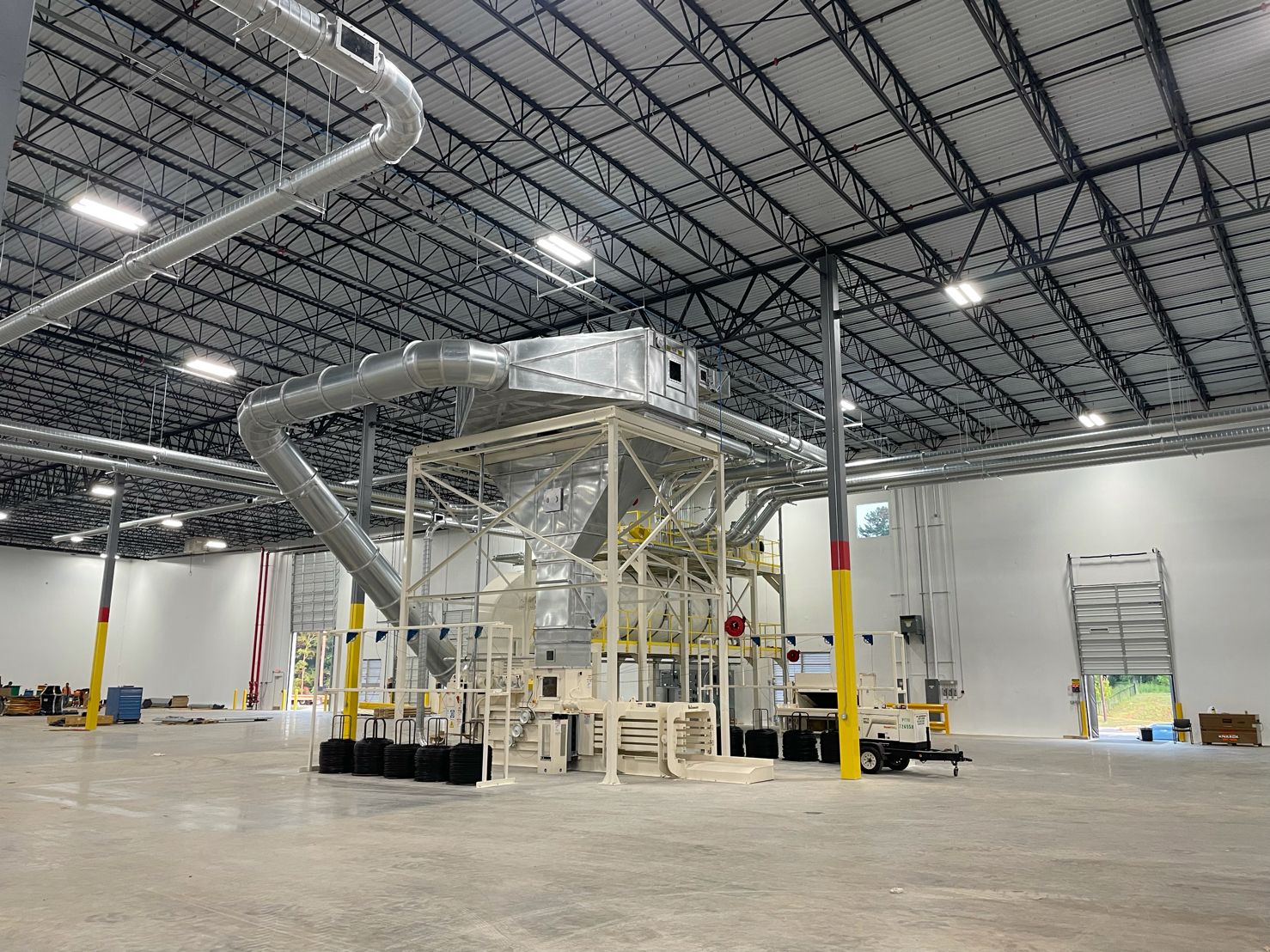
Here is a selection factor most equipment guides never mention: where the air system silo can go. In a typical layout, trim is conveyed to a silo or cyclone above the baler and metered down into the feed chute. But some buildings cannot support a rooftop silo - structural limits, lease restrictions, or layout constraints rule it out. In those plants, the Balemaster EO-Series becomes the answer. Its oversized charging chamber - up to 85 cubic feet with feed chutes up to 75 inches long - lets significantly more material accumulate in the chamber between cycles, absorbing surges from the air system without a large overhead buffer. If your plant cannot put the silo on the roof, the wider EO chamber does the buffering instead.
Tying the Baler Into Your Air System
Most box plants already have trim collection infrastructure - ductwork running from corrugator and converting equipment to a cyclone or silo that discharges toward the baler. When a plant replaces or adds a baler, the new machine has to work with that existing system.
That is how HMS approaches box plant installations: we tie the new or refurbished baler into your existing air system. The baler's hopper configuration and charging chamber are matched to the air system discharge so the machine receives a consistent head of material - which is what lets a horizontal auto-tie run at its rated capacity with minimal operator involvement. Getting this interface right is most of what separates a smooth box plant installation from a troublesome one, and it is where working with a dealer that understands air-fed baling matters.
When you are pricing a baler replacement for a box plant, make sure whoever you buy from is planning the air system interface - discharge height, chute dimensions, chamber volume, and surge capacity - not just dropping a machine in place. The baler and the air system perform as one system, and they need to be planned as one.
Where Shredders Fit in a Box Plant
Balers get most of the attention, but industrial shredders play two important roles in box plant scrap handling - and many plants run both machines as a single system.
Volume reduction before baling
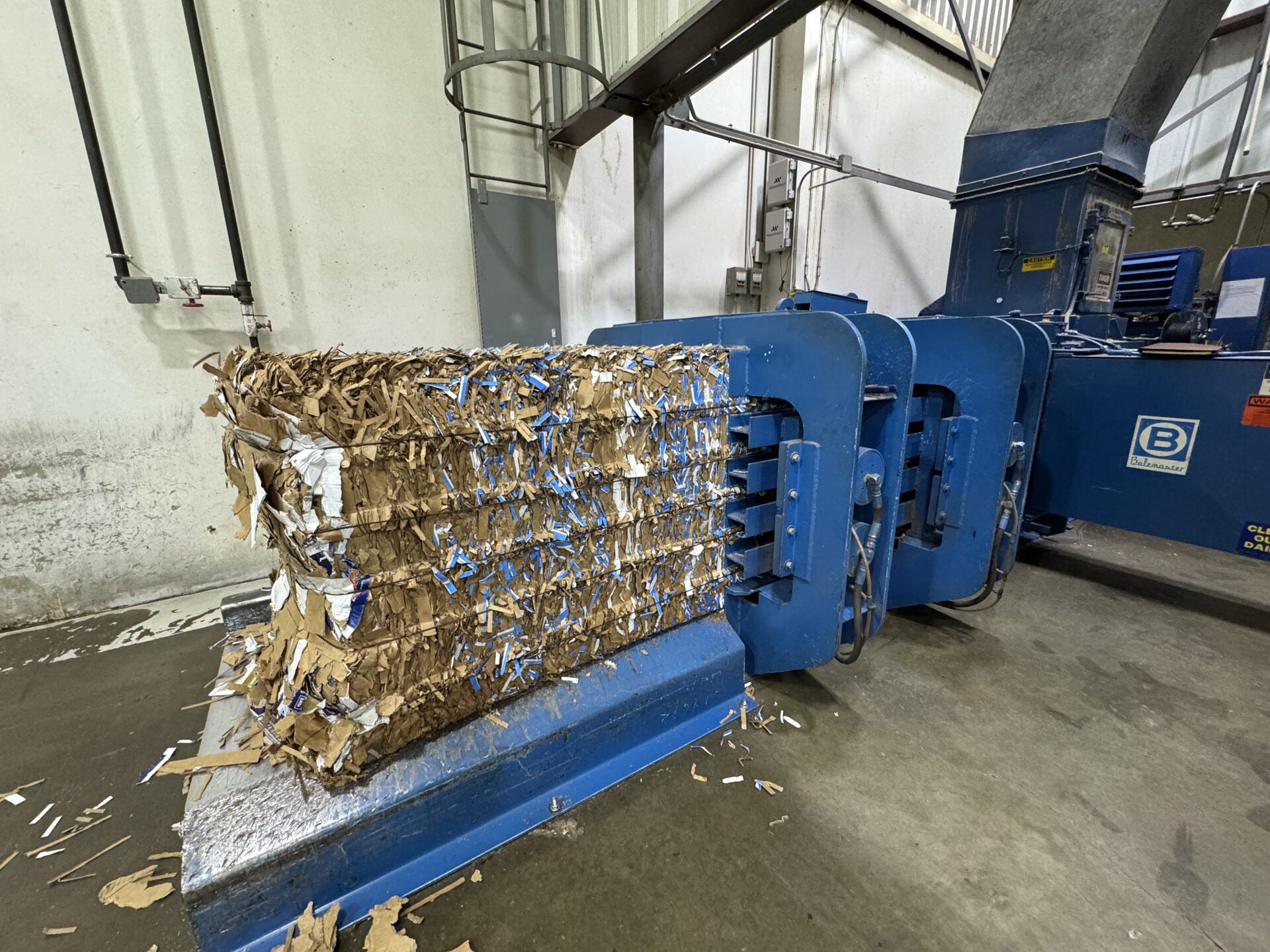
Corrugated sheets, cores, and bulky scrap do not always feed efficiently in whole form. A shredder reduces sheets and oversized scrap into consistent, manageable pieces that convey and bale more densely. Shredded corrugated packs tighter in the bale chamber, which improves bale weight and freight economics.
Product destruction
Box plants regularly need to destroy misprinted boxes, obsolete inventory, and branded packaging - material that cannot simply be discarded intact, because a customer's branded box showing up in the wrong place is a real liability. A shredder provides verifiable destruction: the material is reduced to shreds on-site, then baled and sold as OCC. The plant protects its customers' brands and still captures the commodity value.
The shredder-to-baler system
Here is where it comes together: many box plants run a shredder with an air system discharge that feeds shredded material directly into the baler - alongside the trim arriving from the production lines. Scrap goes into the shredder, shreds convey pneumatically to the baler, and dense OCC bales come out the other end. One continuous system handles trim, oversized scrap, and product destruction with minimal labor.
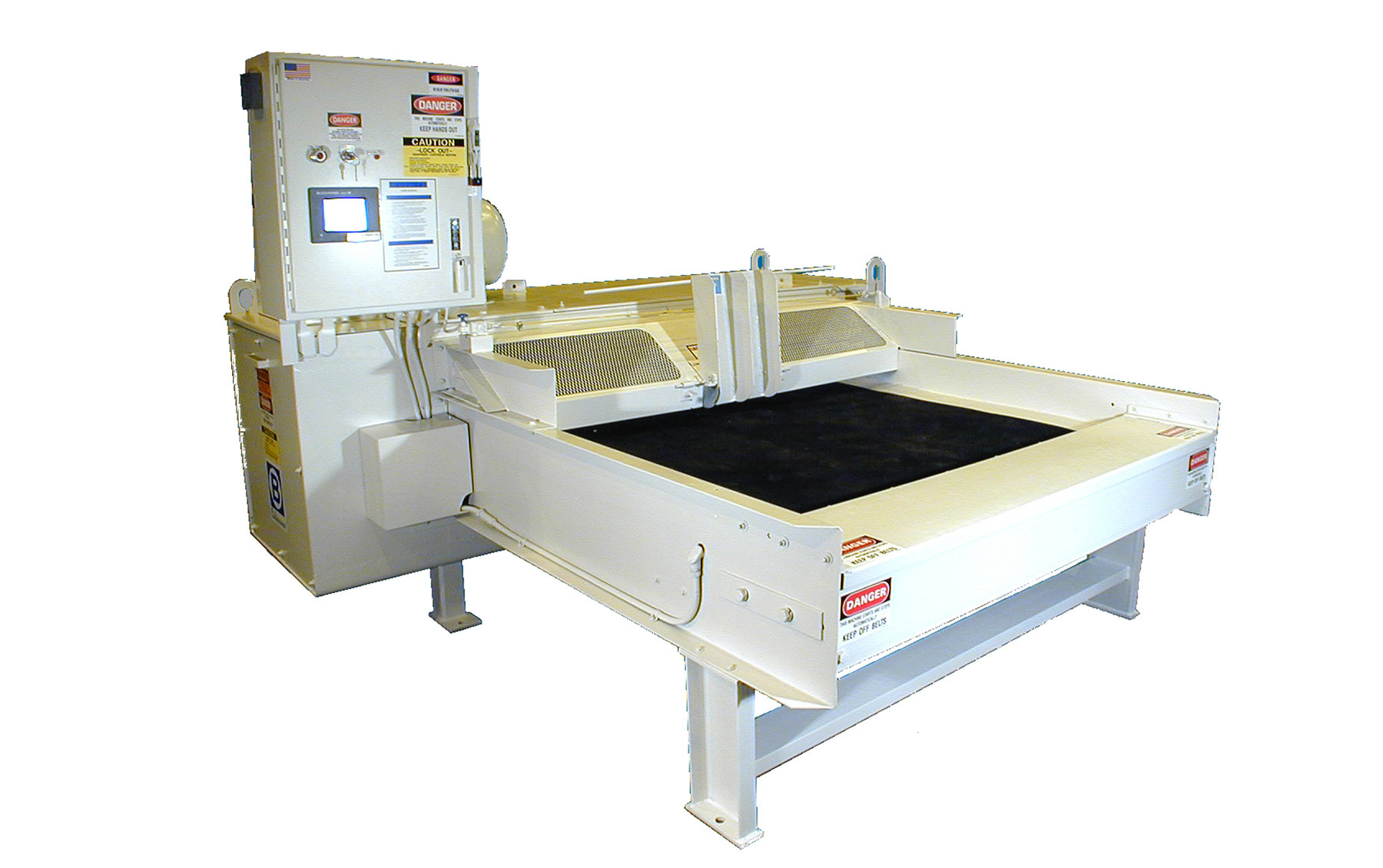
HMS sells three shredder configurations for box plant applications:
- Single shaft shredders - a rotor against a fixed anvil with a sizing screen that controls output piece size. The right choice when consistent shred size matters, such as feeding an air conveyance system with uniform material.
- Dual shaft shredders - two counter-rotating shafts that grab and shear material. High torque at low RPM, well suited to bulky scrap, cores, and mixed corrugated waste where throughput matters more than precise piece size.
- Corrugated/triple shaft shredders - purpose-built for corrugated, combining shearing shafts with sizing control for high-volume corrugated scrap and product destruction applications.
Which configuration fits depends on your material mix, your throughput, and whether the shredder discharge feeds your baler. HMS can supply the shredder and baler together as a turnkey system - sized to each other, integrated with your air system, and installed and serviced by our own team.
What Box Plant Baling Equipment Costs
| Machine type | New | HMS Refurbished | Best for |
|---|---|---|---|
| Horizontal closed-door / manual-tie | $100,000 - $180,000 | $50,000 - $90,000 | Small to medium sheet plants, lower trim volume |
| Horizontal auto-tie | $185,000 - $300,000 | $95,000 - $125,000 | Box plants of all sizes with air or conveyor fed trim |
| Industrial shredder | Quoted per application | Volume reduction and product destruction | |
Shredder pricing varies significantly with shaft configuration, throughput requirements, and infeed and discharge integration, so HMS quotes shredders per application. When a shredder and baler are purchased together as a turnkey system, the two are sized and quoted as a package.
Financing available - approvals in as little as 24 hours
HMS works with equipment lenders for qualified buyers on new and refurbished balers and shredders. New equipment qualifies for Section 179 tax deduction in the year of purchase.
Call (219) 733-2108 or contact us online for a quote on box plant recycling equipment.
Frequently Asked Questions
Most box plants of every size run a Balemaster E-Series horizontal auto-tie baler - it is built for continuous corrugated trim fed from an air conveyance system. Small to medium sheet plants sometimes run horizontal closed-door balers at lower volumes. Plants that cannot mount their air system silo on the roof often step up to the Balemaster EO-Series, whose wider charging chamber allows more material to accumulate between cycles. HMS is an authorized Balemaster dealer and helps box plants match the machine to their trim volume and air system layout.
Most box plants collect trim from converting equipment through an air conveyance system that discharges into the baler's feed chute or hopper, providing a continuous head of material for the baler. HMS ties new and refurbished balers into a plant's existing air system - the baler's hopper configuration and charging chamber are matched to the air system discharge so the machine receives a consistent feed.
Box plants use industrial shredders for two purposes. First, volume reduction - shredding corrugated trim and sheets before baling. Second, product destruction - securely destroying misprinted, obsolete, or branded boxes so they cannot enter the market. Many box plants run a shredder with an air system discharge that feeds shredded material directly into the baler, creating a continuous shred-and-bale system. HMS sells single shaft, dual shaft, and corrugated/triple shaft shredders and can supply the shredder and baler as a turnkey system.
New horizontal auto-tie balers suited to box plants range from $185,000 to $300,000. Refurbished horizontal auto-tie balers from HMS run $95,000 to $125,000. Refurbished horizontal closed-door and manual-tie balers for smaller sheet plants run $50,000 to $90,000, with new units from $100,000 to $180,000. HMS sells new Balemaster balers and refurbishes machines from all major brands at our Wanatah, Indiana facility.
Bottom Line
Your trim never stops - your equipment decision matters
A box plant's scrap stream is continuous, clean, and valuable - and the equipment handling it should match. For most plants, that means a Balemaster E-Series tied into the existing air system. For smaller sheet plants, a closed-door baler delivers mill-quality bales at a lower entry point. For plants that cannot put a silo on the roof, the EO-Series' wider chamber solves the buffering problem. And where oversized scrap or product destruction is part of the picture, a shredder feeding the baler completes the system.
HMS sells, installs, and services all of it - new Balemaster balers, single shaft, dual shaft, and corrugated/triple shaft shredders, and refurbished machines from all major brands. We tie equipment into your existing air system and can quote the shredder and baler together as a turnkey package. Call us and tell us about your plant.
Tell us your trim volume and air system layout - we will recommend the right equipment and give you a straight quote.