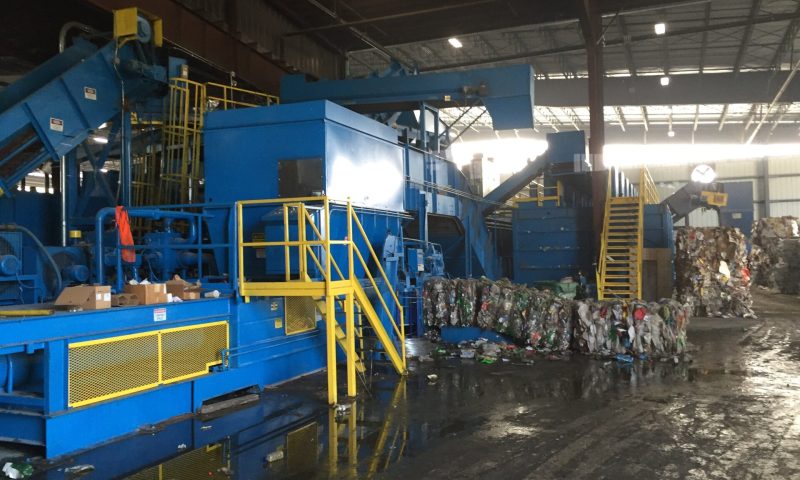
Everything a material recovery facility does ends at the baler. Optical sorters, screens, magnets, eddy currents, and sort crews all exist to feed clean commodity streams to one machine that turns loose material into dense, mill-ready bales. When the baling system is specified correctly, the whole facility runs at capacity. When it is undersized or poorly integrated, the baler becomes the bottleneck that backs up every line upstream of it.
This guide walks through how to spec a complete MRF baling system the way HMS approaches it with customers: material streams first, then the baler, then the conveyor and everything around it. It applies whether you are building a new facility, replacing an aging baler, or adding capacity to an existing line.
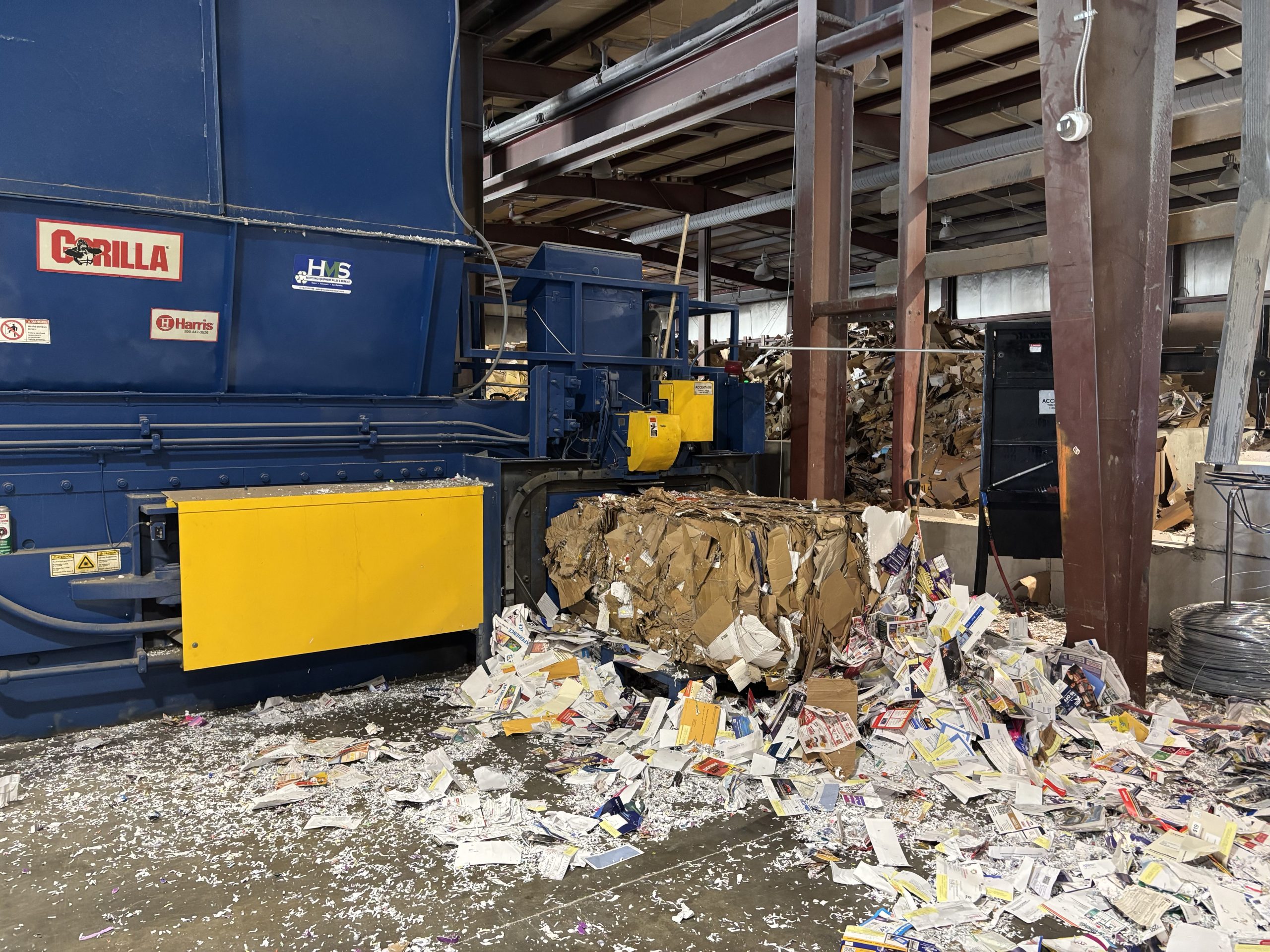
Start With Your Material Streams, Not the Machine
The most common speccing mistake is starting with a baler model and working backward. Start with the material instead. Before talking to any dealer, you should know:
- Commodities baled and their proportions. OCC, mixed paper, ONP, PET, HDPE natural and color, aluminum UBC, steel cans, and film all behave differently in a baler. Many MRFs are also pulling more brown fiber out of mixed paper and baling it as OCC, which shifts the load on the machine.
- Throughput in tons per hour, not tons per day. A facility processing 150 tons per day over two shifts has a very different peak load than one running 150 tons in a single shift. The baler has to keep up with peak sort line output, not the daily average.
- How material reaches the baler. Bunkers and storage bays that discharge in surges put a very different demand on the system than a steady metered feed. Surge loads are where undersized systems fall apart.
- Bale specs your buyers require. Mills and brokers pay on density and consistency. Know the bale sizes and weights your markets want before you spec the machine that makes them.
Rule of thumb: spec the baling system to peak hourly demand on your hardest material, then confirm it still hits your numbers on everything else. A baler that flies on OCC can struggle on mixed containers.
The Two Ram Baler: The Heart of Most MRF Systems
Most MRFs bale multiple commodities on the same machine, and that is exactly what two ram balers are built for. Because a two ram shears and ejects each bale with separate cylinders rather than extruding material through a tension channel, it switches between commodities easily. Bale off the last of the mixed paper, and the next charge can be PET.
That flexibility is why the two ram sits at the heart of nearly every single stream MRF. High volume dedicated fiber lines are the exception: a facility baling nothing but OCC at high tonnage may be better served by a horizontal auto-tie baler, and many large MRFs run both, an auto-tie on fiber and a two ram on containers.
The specs that actually matter on a MRF two ram
| Spec | Why it matters for a MRF |
|---|---|
| Main cylinder bore | Drives compression force and bale density. MRF-grade machines typically run 9" to 13" main cylinders. Density is what your commodity buyers pay for. |
| Motor horsepower and pump flow | HP and GPM determine cycle time under load. More flow means faster strokes and higher throughput. MRF machines commonly run 75 to 200+ HP. |
| Cycle time | Rated cycle times of roughly 15 to 20 seconds are typical. Compare cycle times under load on your materials, not just the no-load number on the spec sheet. |
| Feed opening | Must match your conveyor discharge and material. A large opening, such as 40" x 90"+, reduces bridging on bulky OCC and rigid plastics. |
Bale weights matter too. A MRF two ram producing 60" x 30" x 45" class bales will typically turn out fiber bales in the 1,400 to 1,800 pound range and container bales that vary widely by commodity. Your freight economics and mill contracts are built on those numbers, so confirm expected bale weights by material with your dealer before you commit.
Sizing to Avoid the Bottleneck
The baler has to be faster than the sort line feeding it. That sounds obvious, but it is one of the most common failures in MRF system design, and it usually happens for one of three reasons:
- Sizing to average instead of peak. Bunker discharges, shift-end cleanouts, and heavy inbound days all create surges. If the baler only matches average throughput, material piles up on the floor during every surge.
- Sizing on the easy material. Rated tons per hour on OCC can be double the same machine's real-world rate on mixed containers. Size on your slowest commodity at peak volume.
- Ignoring downtime math. A two-shift MRF running six days a week has very little maintenance window. For operations at that pace, it is worth discussing redundancy, whether that is a second baler, a service agreement with guaranteed response, or a refurbished backup machine, because a single baler down means the entire facility is down.
Infeed Conveyors: Where System Design Is Won or Lost
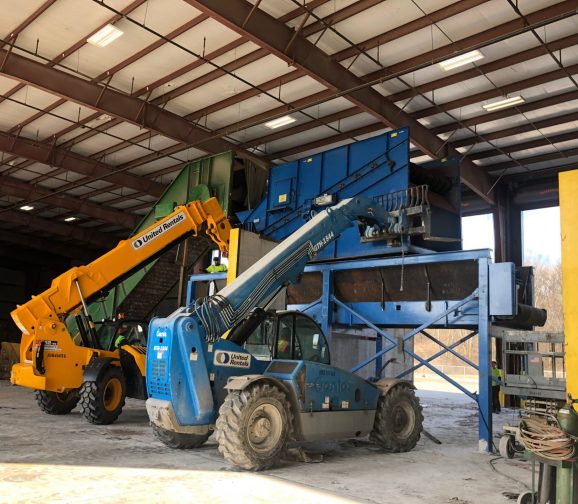
A baler is only as good as the conveyor feeding it. Conveyor integration is where a machine purchase becomes a system, and it is where an experienced dealer earns their keep. The main decisions:
Pit conveyor vs. above-ground
A pit conveyor sits below floor level so loaders and sort line drops feed it at grade, saving vertical space and making loading fast. The tradeoffs are excavation cost and harder service access. An above-ground conveyor avoids the pit but needs a longer incline run and more floor space to reach discharge height. Building height, floor layout, and budget decide this one.
Belt type
Steel belt conveyors handle abrasive, heavy, and hot loads and are a standard choice for mixed MRF material and metals. Chain rubber combo belts are a proven option for fiber and containers. Slider bed conveyors have the ability to suit lighter, cleaner streams. HMS rebuilds and installs all three types.
Geometry and metering
Discharge height has to clear the baler's charge hopper, often 10 feet or more on large two rams. The conveyor's width and speed need to meter material into the feed opening evenly, because flood-feeding a baler causes bridging and jams while starving it wastes cycle capacity. Controls that pace the conveyor to the baler's cycle keep the flow steady without an operator babysitting it.
Controls, Automation, and the Rest of the System
A modern MRF baling system runs on its controls. A current-generation PLC with a touchscreen interface gives operators real-time diagnostics, cycle data, and fault history, and lets the baler and conveyor operate as one coordinated system. On older machines, aging analog controls are one of the most common sources of unplanned downtime, and a PLC and controls upgrade is often the highest-return improvement short of a full rebuild.
Round out the system spec with the items that get forgotten until startup:
- Wire supply. Confirm wire gauge, consumption per bale, and storage for wire stems or boxes near the tier.
- Bale handling. Plan the path from ejection to storage to loadout, including forklift clearances and staging capacity for your slowest-moving commodity.
- Electrical service. Large two rams need substantial three-phase service. Verify your building's capacity early, not after the machine ships.
- Foundation and floor. Verify slab thickness and condition for the baler footprint and pit, if applicable.
New vs. Refurbished for MRF Duty
New two ram balers typically start around $240,000 and climb well past $600,000 for large MRF-class machines, with full manufacturer warranties behind them. A professionally refurbished two ram, rebuilt with new liners, resealed or replaced cylinders, updated hydraulics, and a modern PLC with remote diagnostics, delivers comparable performance at a significantly lower investment. HMS refurbished equipment carries a 120-Day Parts and Labor Warranty, and every machine is rebuilt in our Wanatah, Indiana shop by the same technicians who service MRF equipment in the field.
For many MRFs the right answer is a mix: new where uptime risk justifies the premium, refurbished where the budget stretches further, and a clear service plan behind both. Browse current used and refurbished equipment to see what is available now.
How to Evaluate a Systems Partner, Not Just a Machine Price
Buying a MRF baling system from whoever quotes the lowest machine price is how facilities end up with a baler that does not match their material stream and volume, or can't find someone to speak with when issues arise or parts are needed. Evaluate dealers on the whole system:
- Do they design, or just sell? A systems partner walks your facility, measures the building, and specs baler, conveyor, and controls as one integrated design.
- Who installs? In-house installation crews mean the people who designed the system are accountable for commissioning it. HMS handles rigging, installation, electrical integration, startup, and operator training with our own team.
- Who services it after startup? Ask about field service coverage, emergency response, reline capability, and parts stocking for the specific machine you are buying, before you buy it.
- Do they know MRF duty? A dealer who understands surge loads, commodity switching, and mill bale specs will spec a different system than one who mostly sells distribution center balers.
HMS has supplied, installed, and serviced recycling equipment for material recovery facilities since 2004, from single baler replacements to complete turnkey MRF systems with balers, conveyors, sort systems, and shredders.
Frequently Asked Questions
What type of baler is best for a MRF?
Most MRFs are best served by a two ram baler. A two ram switches between commodities like OCC, mixed paper, PET, HDPE, and aluminum without re-threading wire or purging the chamber, which matters when a facility bales multiple material streams every shift. Very high volume single-commodity lines, such as dedicated OCC, can justify a horizontal auto-tie baler instead. Many larger MRFs run both.
How do I size a baler for my MRF's throughput?
Size the baler to your sort line's peak output, not the daily average. Work from tons per hour by commodity, then check the baler's rated throughput for your hardest material, usually containers rather than OCC. Add margin for surge loads when bunkers discharge. If the baler cannot outpace the sort line at peak, the whole facility bottlenecks at the baler.
Does a MRF baler need a pit conveyor or an above-ground conveyor?
Either can work. Pit conveyors allow floor-level loading and save vertical space, but require excavation and are harder to service. Above-ground steel belt or chain rubber combo conveyors avoid excavation and are easier to maintain, but need a longer incline run and more floor space to reach the baler's charge hopper. The right answer depends on building height, floor space, material flow, and budget. HMS evaluates all of this during system design.
Should a MRF buy a new or refurbished two ram baler?
It depends on throughput and budget. New two ram balers typically start around $240,000 and offer full manufacturer warranties. A professionally refurbished two ram with new liners, rebuilt cylinders, and a modern PLC delivers similar performance at a significantly lower cost. HMS refurbished equipment carries a 120-Day Parts and Labor Warranty. For high-throughput MRFs, service support and parts availability matter more than whether the frame is new.
Bottom Line: Spec the System, Not Just the Baler
A MRF baling system done right is one integrated design: material streams defined first, a two ram sized to peak demand on the hardest commodity, a conveyor matched to the building and the feed opening, modern controls tying it together, and a service partner behind all of it. Get those pieces right and the baler stops being a bottleneck and starts being the machine that pays for the whole facility.
HMS designs, supplies, installs, and services complete MRF baling systems, new, refurbished, and everything in between. Tell us your material streams and throughput, and we will spec the system with you.
Planning a MRF Baling System?
From a single baler replacement to a full turnkey system with conveyors and sort equipment, HMS handles design, installation, startup, and long-term service in-house.