Almost every conversation about buying a baler is a conversation about purchase price. That is the number that goes in the capital request, the number that gets compared across quotes, and the number everyone remembers. It is also the one number that stops mattering the day the machine starts running.
What matters after that is what the machine costs to keep running: wire, power, oil and filters, wear parts, the labor to operate it, the service calls, and the hours it is not running when it should be. Spread across the fifteen or twenty years a well-maintained baler will work, those costs add up to far more than the sticker.
The good news is that most of them are controllable, and they are controlled by the same thing: consistent maintenance. This guide breaks down where the money actually goes on horizontal manual-tie, horizontal auto-tie, and two ram balers, and includes a complete preventive maintenance schedule you can hand to whoever runs the machine.
The Cost Buckets, Roughly Largest to Smallest
Every operation is different, so treat this as the shape of the problem rather than a budget. What is consistent is the order of magnitude, and how often the biggest costs are the least visible.
1. Downtime
This is the largest cost of owning a baler and it never appears on an invoice. When the baler stops, everything upstream of it backs up. Material piles on the floor, a sort line or production line slows or stops, and people get pulled off their jobs to deal with it. On a single-baler site, a machine down for a day can effectively stop the facility. Compared to that, the price of the part that failed is a rounding error.
Almost every dollar in this bucket traces back to something in the buckets below being deferred.
2. Labor
The second largest, and the one most sensitive to how the machine is fed. A manual-tie horizontal needs an operator tying off every bale. A hand-fed machine needs someone bringing material to it. A machine that jams needs someone clearing it. This is why infeed conveyors and auto-tie machines pay for themselves in operations at volume: they are buying back labor hours, every shift, for the life of the machine.
3. Wear parts
Liners, knives, and hold down bars are consumable by design. They exist to absorb the wear of compressing material thousands of times a day so the structural steel of the machine does not have to. The cost driver here is not the parts, it is timing: a reline caught at the right point is a liner and knife replacement, while a reline deferred too long becomes a liner replacement plus structural repair to the subfloor or subwall. The second job costs substantially more, and it is entirely avoidable.
Two ram balers have more wear surfaces than single-ram horizontals, because material is worked through both a gatherer chamber and a compression chamber, so a full reline covers more ground.
4. Baling wire
The most visible recurring cost, because you buy it constantly. Wire consumption is driven by bale count and wire count per bale, so anything that increases bale density reduces wire cost per ton: you are tying fewer, heavier bales. Wire is a real line item, but it is usually smaller than people expect relative to wear parts and labor, and it is not where the savings are.
5. Hydraulic oil and filters
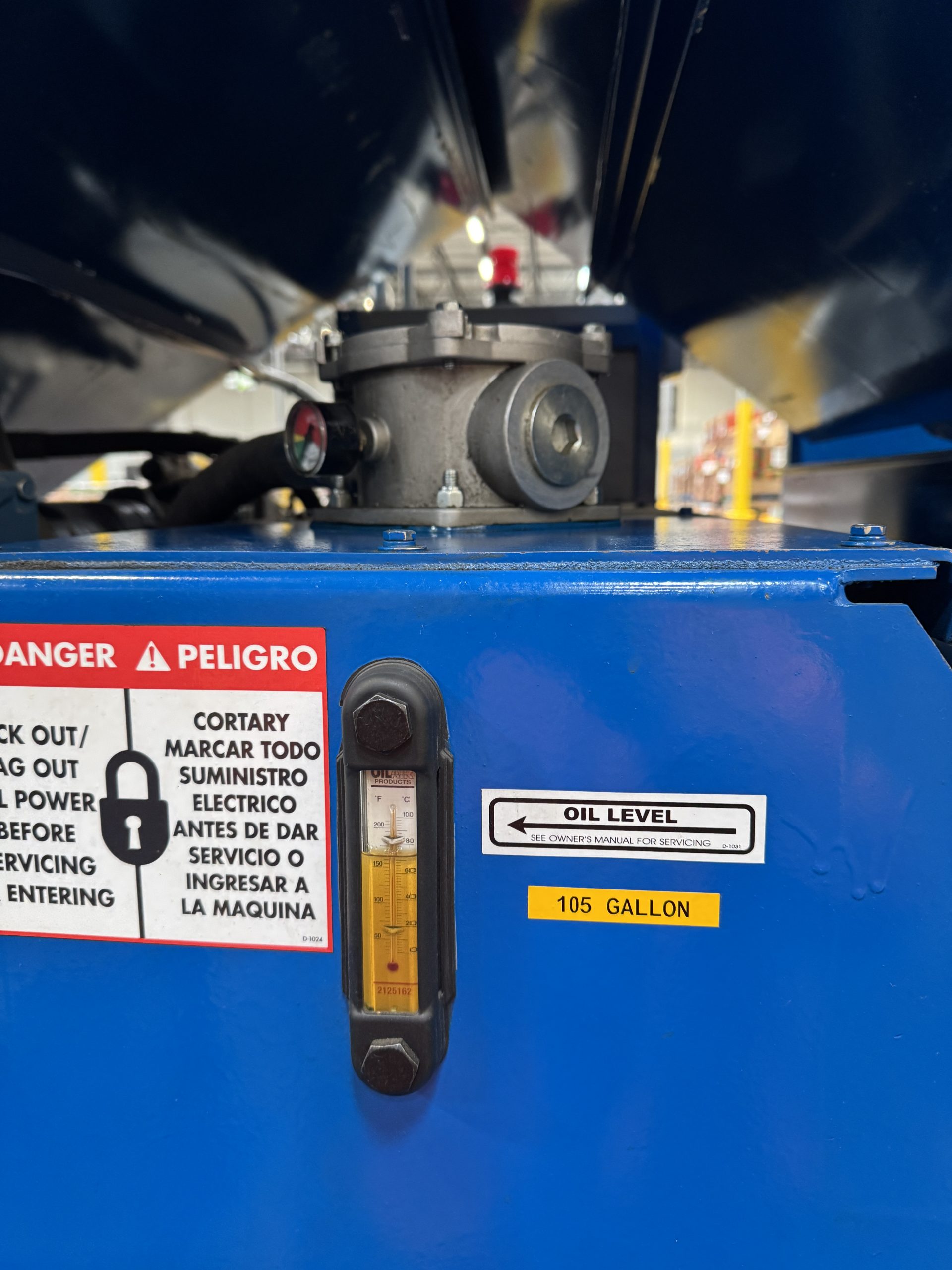
Small in dollars, disproportionate in consequence. Oil filter and breather filter changes every three months or 500 hours of operation, and yearly oil sampling, are inexpensive. Skipping them is how contamination gets into a hydraulic system and turns into pump and valve failures that are not inexpensive at all.
One detail worth knowing: new oil rarely meets the cleanliness codes pump and valve manufacturers require. Oil should be filtered as the tank is filled rather than pumped straight from a barrel or bulk truck.
6. Electricity
Steady and predictable, and easy to estimate for yourself.
Estimating your baler's power cost
- Motor horsepower × 0.746 = kilowatts at full load
- × average load factor (the motor is not at full load through the whole cycle)
- × run hours per day
- × your utility rate per kWh
Example with placeholder numbers: a 40 HP motor is about 30 kW at full load. At roughly 60% average load over six run hours a day, that is on the order of 100 kWh per day. Plug in your own horsepower, hours, and utility rate for a real figure.
Power matters more as machine size and run hours grow, but for most operations it is a smaller line than wear parts, labor, or a single avoidable breakdown.
7. Service
Parts, technician time, and travel. The important thing about this bucket is not its size but its timing, which we will come back to.
The pattern worth noticing: the two biggest costs, downtime and premature wear, are both consequences of the smallest ones being skipped. Filters, grease, and a fifteen-minute cleanout are the cheapest items on the list and the ones that keep the expensive items from happening.
What Drives These Costs Up
- Deferred maintenance. The single biggest multiplier. Every bucket above gets worse when PM slips.
- Material and contamination. Abrasive, gritty, or contaminated streams chew liners and knives faster than clean OCC. Your material dictates your wear rate more than your machine brand does.
- Duty cycle. A machine running two shifts wears at roughly twice the rate of one running a single shift, and gets half the maintenance window. High-use operations need shorter intervals than the manual's baseline, not the same ones.
- Feed method. Flood-feeding causes jams and bridging. Starving wastes cycles. Steady metered feed is easier on the machine and on the labor line.
- Operator training. Machines run by people who understand the controls and the daily routine last longer. This is free and routinely skipped.
The Preventive Maintenance Schedule
What follows is a general schedule drawn from manufacturer care requirements for horizontal and two ram balers. Always follow the specific intervals in your own machine's manual, and shorten them for high-use operations.
Before any maintenance: lock out and tag out power per OSHA requirements, and wear safety glasses. Never search for hydraulic leaks with your hands. Use a piece of cardboard or wood, because high pressure fluid can penetrate skin and cause serious injury.
Daily
- Clean the photo eyes.
- Clean out behind the main platen. Material migrates there through the built-in clearance around the platen, and letting it build up causes malfunctions and can lead to structural failure.
- Clear debris from the tier track and behind the squeeze door.
- Check that the wiper is not being pushed up by material.
- Clean the machine and power unit with forced air and a broom.
- Check that all access covers are secured.
- Check hydraulic reservoir oil level with the rams retracted.
- Check hydraulic hoses and lines for damage and leaks.
On two ram machines, lubricate the wire tier daily per the tier manual, and clean out behind both rams. Cleanout intervals run as short as every 20 hours on some two rams and every 40 hours on horizontals, so check your manual.
Weekly
- Check the disconnect switch function and confirm a padlock is available for servicing.
- Check hydraulic oil level in the sight gauge with the platen fully retracted, and top up if needed.
- Inspect the pump, valve, cylinders, and hoses for leaks, damage, and kinks.
- Grease the wear pads, door latch hinges, and door hinges. Lubricate roughly every 35 to 40 hours of operation, more often under high use.
- Inspect the power unit. Remove dust and dirt from the reservoir, control box, and electrical enclosure. Keep ventilation openings clear.
- Inspect and grease cylinder pins.
- Test every control, including the photo eye and the emergency stop.
- Clean the wire tie slots and wire guides.
- Inspect the door, latch, welds, structure, and hinge pins for wear.
- Inspect the platen wiper and the dogs for free movement.
- Check all nuts and bolts for tightness.
- Walk the machine and inspect overall condition, decals, and structure.
Machines with sensors need the sensor path kept clear. On laser distance sensor machines, clean the sensor and target and verify nothing blocks the path.
Monthly
- Lock out power and have a qualified electrician check the tightness of all wires. Do this after the first week of use, then monthly.
- Change the oil filter and breather filter every three months or every 500 hours of operation, whichever comes first.
- Grease platen cylinder end zerks.
- Inspect breather filters for damage.
- Check shear bar clearance and cutting edges, and inspect for structural problems such as cracked welds.
Semiannual
- Check wear liners. Liners showing excessive wear should be replaced before wear reaches structural steel.
- Inspect the shear edge. Remove the bolts and rotate to a clean edge if needed.
- Check platen to shear edge clearance and adjust if necessary.
- Check the wear pads the platen rides on.
- Have a qualified electrician or technician check all electrical connections and motor resistance. Recording successive readings helps predict failures before they happen.
- In dirty, wet, or corrosive environments, add grease to motor bearings every three months using a rust-inhibited polyurea grease.
Yearly
- Have an oil sample tested. Your oil distributor can tell you whether the oil needs changing or the additives need replacing.
- Check floor liners for gouging and excessive wear, and check platen liners.
- Full electrical inspection by a qualified technician.
Keep the Records. Two Reasons.
This is the part almost nobody talks about, and it costs nothing to get right.
First, warranty. Manufacturers commonly state that warranty coverage depends on your maintenance records. If a component fails inside the warranty period and there is no documentation that the machine was maintained, the claim gets harder to make.
Second, responsibility. The employer using baling equipment is responsible for establishing and following a program of periodic and regular inspection, for ensuring all parts, auxiliary equipment, and safeguards are in safe operating condition and adjusted to the manufacturer's specifications, and for maintaining records of those inspections and the maintenance work performed. The employer is also responsible for training whoever performs that maintenance, and for keeping the area around the machine clear and free of accumulated water, grease, and oil.
A simple signed checklist on a clipboard at the machine satisfies both. Most manufacturers include a PM checklist in the manual that can be copied for exactly this purpose.
Where a PM Plan Actually Helps
The savings are not in the visit price. They are in how many visits you need, and when they happen.
- Fewer emergency calls. A machine on a consistent PM program breaks down less. That is the entire premise, and it holds up: most emergency calls trace back to something that a routine inspection would have caught.
- Planned instead of unplanned. A PM visit happens on a date you chose, during a window you can afford. A breakdown happens whenever it happens, usually at the worst time, with material stacking up while you wait.
- Wear caught before it compounds. Liners replaced on schedule stay a liner job. Liners ignored become a structural repair.
- Records that hold up. A service program produces the documentation that protects warranty claims and satisfies inspection requirements.
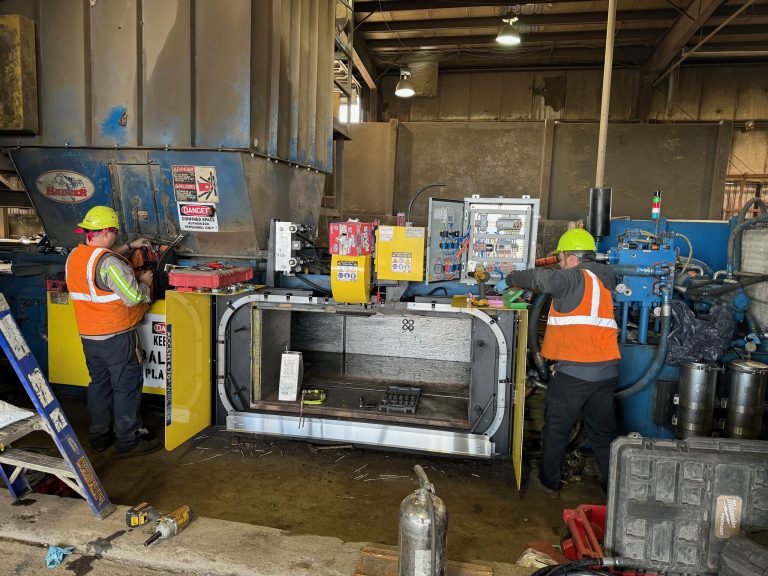
HMS provides field service, relines, hydraulic and electrical repair, and emergency response on all major brands, whether or not you bought the machine from us. We can also build a PM plan into the equipment purchase up front, so the schedule is in place from the day the machine starts running rather than something you get around to setting up later.
Frequently Asked Questions
What are the ongoing costs of owning a baler?
The recurring costs are baling wire, electricity, hydraulic oil and filters, wear parts such as liners and knives, operator labor, and service. The largest cost is usually the one that does not appear on any invoice: downtime. A baler that stops running backs up the operation behind it, and on a single-baler site that can mean the whole facility. Most of the controllable costs trace back to how consistently the machine is maintained.
How often does a baler need preventive maintenance?
Baler maintenance runs on overlapping schedules. Daily items include cleaning photo eyes and clearing material from behind the platen. Weekly items include checking hydraulic oil level, inspecting for leaks, greasing wear pads and pins, testing controls, and checking fasteners. Monthly items include changing the oil filter and breather filter every three months or 500 hours of operation. Semiannual items include checking wear liners and the shear edge. Yearly items include oil sampling and a full electrical inspection by a qualified technician.
How much electricity does a baler use?
Estimate it from motor horsepower, average load, and run hours. Multiply motor horsepower by 0.746 to get kilowatts, multiply by an average load factor since the motor is not at full load through the whole cycle, multiply by daily run hours, then by your utility rate. A 40 HP baler running six hours a day at roughly 60 percent average load uses on the order of 100 kilowatt-hours per day. Power is a real cost but usually a smaller line than wear parts, labor, or downtime.
Does skipping baler maintenance void the warranty?
It can. Manufacturers commonly state that warranty coverage depends on maintenance records. Beyond the warranty, employers are responsible for establishing a program of periodic inspection of baling equipment, ensuring parts and safeguards are in safe operating condition, and maintaining records of inspections and maintenance work performed. Keeping a signed maintenance log protects both the warranty claim and the compliance position.
Is a preventive maintenance plan worth it?
A scheduled PM visit and an emergency service call cost about the same per visit. The difference is that a machine on a consistent PM program needs the emergency call far less often, and the visit happens on a planned date instead of in the middle of a shift with material backing up. HMS can also build a PM plan into the equipment purchase up front, so the schedule is in place from the day the machine starts running.
Bottom Line: The Cheap Items Control the Expensive Ones
A baler's purchase price is a one-time number. What it costs to own is decided every week, by whether someone cleaned out behind the platen, checked the oil level, greased the pins, and looked at the liners before they wore through.
Those items cost almost nothing. Skipping them is what turns a liner job into a structural repair, a filter change into a pump failure, and a planned Tuesday visit into a line-down emergency. Run the schedule, keep the records, and a well-built baler will work productively for decades.
HMS sells, installs, services, and relines balers of all major brands, and can build a maintenance plan around your machine and your material. Tell us what you are running and we will help you keep it running.
Need Service or a PM Plan?
HMS handles field service, relines, hydraulic and electrical repair, and emergency response on all major brands, and can build a PM plan into a new equipment purchase.