Most conversations about baling equipment assume two options: keep running what you have until it dies, or buy a new machine. There is a third option that gets skipped constantly, and it is often the right one.
A baler is mostly a very heavy steel frame with hydraulics and controls attached. The frame is the expensive part, and on a well-built machine it is usually the part in the best shape. What actually limits an older baler is rarely the structure. It is aging controls nobody can diagnose, worn liners nobody replaced on time, a hydraulic system losing pressure, or the simple fact that material still reaches the machine by forklift and a person with a broom.
Every one of those is fixable on the machine you already own. This guide covers what HMS retrofits most often, what each upgrade actually changes on the floor, and the honest cases where a rebuild is the wrong call and the money belongs somewhere else.
Why Retrofit Instead of Replace
- Capital. A rebuild or upgrade is normally a smaller investment than a new machine, which matters when the money is competing against production equipment for the same budget.
- Lead time. New balers are built to order. A retrofit happens on a machine that is already in your building.
- The frame is fine. A structurally sound baler has decades of service life in it. Replacing it to get modern controls is buying a new frame you did not need.
- Targeted fixes. You can solve the specific thing limiting the operation, whether that is downtime, labor, or throughput, rather than buying a whole new machine to address one of them.
The Upgrades We Do Most Often
1. PLC and controls upgrades
The single most requested retrofit, and usually the one with the most visible effect on daily operation. Older analog controls are among the most common sources of unplanned downtime, and as machines age, the people who can troubleshoot those controls get harder to find.
This can be scoped two ways. A straightforward PLC upgrade replaces the brain of the machine with a current-generation controller. A full operator station upgrade goes further and changes how the machine is run day to day:
- Touchscreen controls. Real-time diagnostics, cycle data, and fault history in plain language, instead of guessing from a panel of indicator lights.
- Laser travel. Precise ram position sensing for consistent bale length and cleaner cycle control.
- High temperature and low oil sensors. The machine tells you it has a problem before the problem becomes a pump failure.
- Remote diagnostics. A technician can see what the machine is doing without driving to the site, which shortens the time between a fault and a fix.
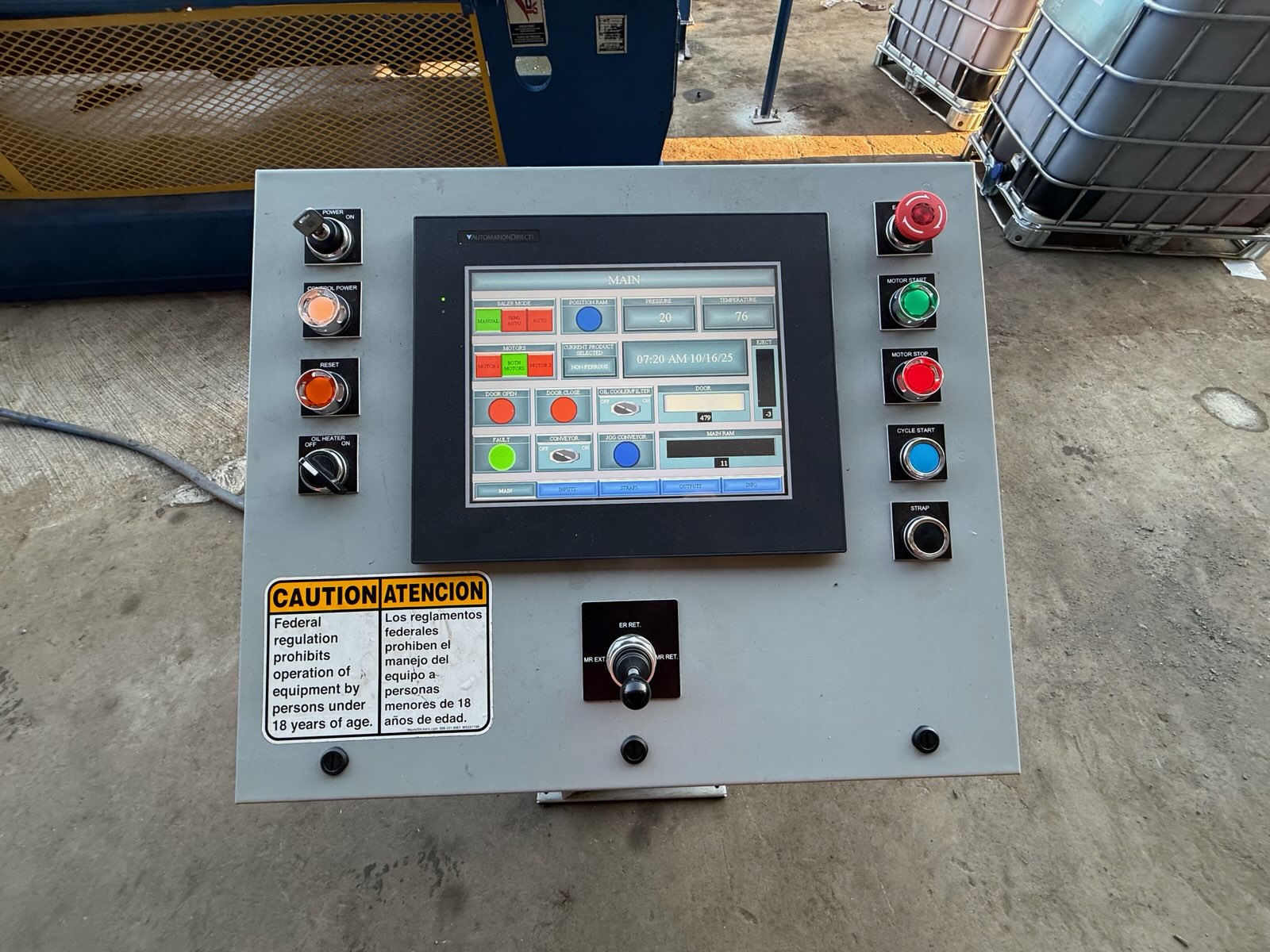
Remote diagnostics can be added to older machines as part of the PLC upgrade. That is worth emphasizing, because plenty of owners assume monitoring is something only a new machine can have.
2. Structural rebuilds and relines
A full rebuild replaces all the wear components: liners, knives, and other wear components. These parts are consumable by design. They exist to absorb compression wear so the structural steel underneath does not have to.
The reason this is a top-three retrofit is timing. A reline caught at the right point is a wear component job. One deferred too long becomes a wear component job plus structural repair to the subfloor or subwall, which costs substantially more and is entirely avoidable. A rebuild restores a machine to producing the bale density it was designed to produce, which is what your commodity buyers are paying for.
3. Hydraulic rebuilds
New pumps, hydraulic oil replaced, leaks found and fixed, and cylinder rebuilds or reseals where needed. A baler losing pressure produces loose bales, slow cycles, and a machine that works harder for less output, and owners often accept that decline gradually because it happens slowly enough not to feel like a failure.
A hydraulic rebuild frequently restores cycle times and bale density that the operation had quietly written off as "how this machine runs now."
4. Adding conveyors and auxiliary equipment
The retrofit that changes throughput and labor rather than just restoring the machine. Adding an infeed conveyor to a hand-fed baler removes the labor of carrying material to the machine and keeps the charge chamber consistently full, so the baler cycles at its designed rate instead of waiting on people.
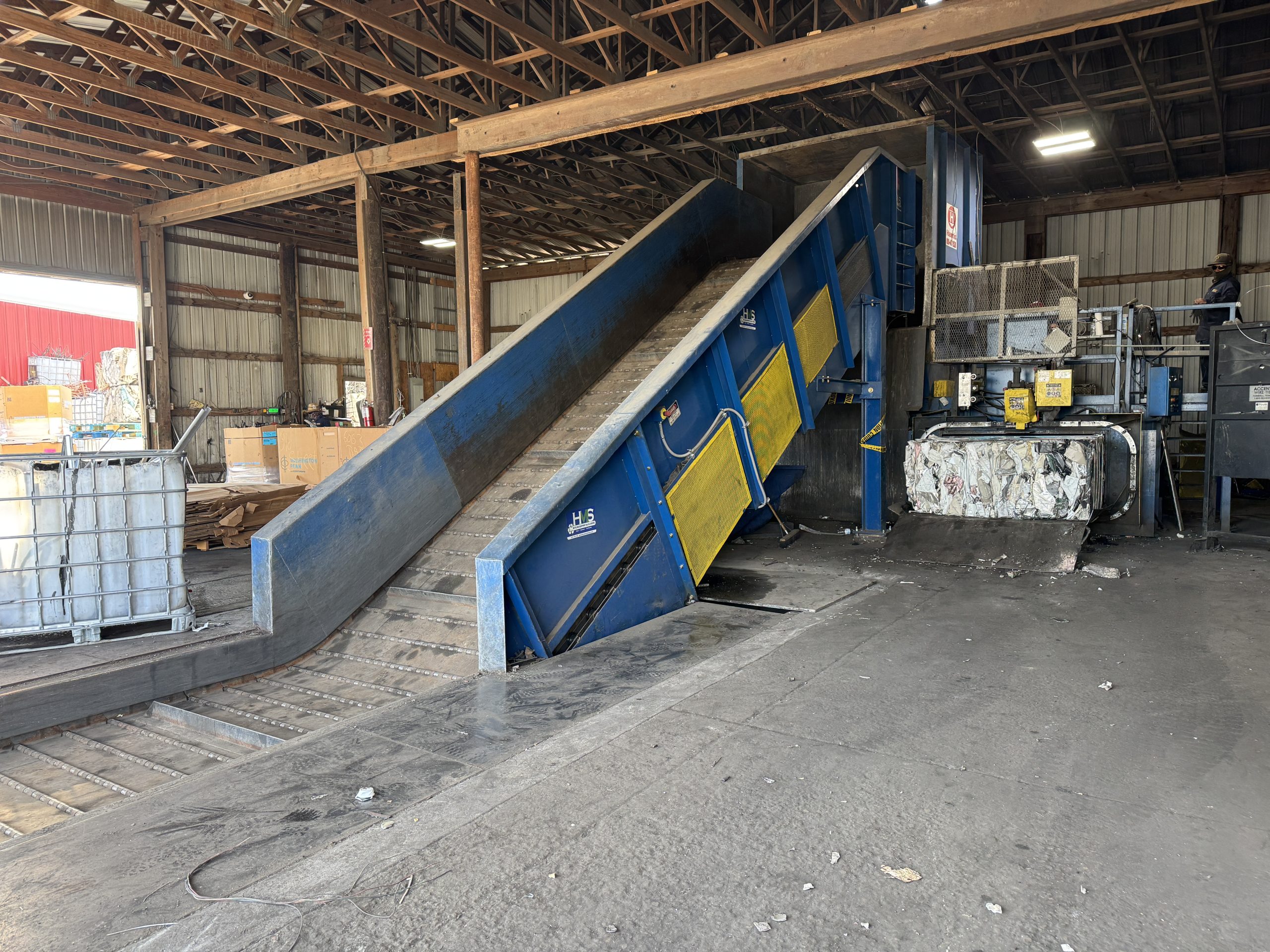
The same logic applies to the rest of the line. Cart dumpers take the lifting out of feeding. Roll splitters cut roll stock down to a size the system can process. A shredder ahead of the baler densifies material, eliminates infeed jams, and removes the size limit on what you can bale. Any of these can be added to an existing system, and a shredding system can also be installed on its own.
Other Retrofits Worth Knowing About
| Upgrade | What it addresses |
|---|---|
| Cylinder rebuilds and reseals | Pressure loss, drift, and leaking without replacing the cylinder outright |
| Motor and pump changes | Restoring cycle speed, or increasing capacity within the machine's limits |
| Safety upgrades | Guarding, interlocks, and controls brought current on older machines |
| Accent 470 wire tier upgrades | Tier reliability and speed, a common throughput bottleneck on auto-tie machines |
| Hydraulic component replacement | Valves, hoses, and lines on systems that are otherwise sound |
Wire tier upgrades deserve a specific mention. On an auto-tie machine, tier speed and reliability cap throughput regardless of how well the rest of the baler runs, and tier faults are a frequent source of downtime. Upgrading the tier on an otherwise healthy machine is one of the more overlooked ways to get production back.
When Replacing Makes More Sense
Rebuilds and retrofits are a significant investment. There are cases where that money goes further toward a different system. Three situations point toward replacement:
- Major structural failure. When the frame itself is compromised badly enough, you are no longer doing maintenance. You are rebuilding the expensive part of the machine, and the economics change completely.
- Obsolete parts availability. If components can no longer be sourced, every future repair becomes a fabrication project with unpredictable cost and lead time. A machine you cannot get parts for is a downtime risk that a rebuild does not fix.
- The machine was never right for the job. If the baler is undersized for current volume, or was not specified correctly for the material being processed, rebuilding it restores a machine that does not fit your operation. You will be back in the same conversation in two years.
The question that settles it: is the machine fundamentally sound and correctly sized for what you run today? If yes, retrofitting almost always wins on cost and lead time. If no, a rebuild is money spent restoring the wrong machine.
Any US Manufacturer, Whether You Bought It From Us or Not
HMS services and retrofits balers from any US manufacturer, and some manufacturers outside the US, though not all. We work on machines we did not sell as a matter of course.
The practical first step on any retrofit is confirming parts availability for your specific make and model. Tell us the make, model, and what the machine is doing, and we will find out before anything gets scoped.
How a Retrofit Actually Goes
Every job is different, but the shape is consistent. It starts with an assessment of the machine, either on site or from the information you can provide, covering structural condition, hydraulic health, controls, and parts availability. From there the work gets scoped against what you are trying to fix, whether that is downtime, labor, throughput, or bale quality, and quoted against the alternative of replacement so you can compare the two honestly.
The work itself is scheduled around your operation. A retrofit means the machine is down while it happens, so the plan accounts for that: scoping the sequence, staging parts before work begins, and picking a window that fits your production schedule rather than fighting it. Controls upgrades, relines, and hydraulic rebuilds each carry different timelines, and knowing which one you are doing is what makes that window predictable.
HMS handles field service, relines, hydraulic and electrical repair, and installation with our own crews, so the people who scope the work are the people who perform it.
Frequently Asked Questions
Can an old baler be upgraded with new controls?
Yes. A controls upgrade is the most common baler retrofit HMS performs. It can be a straightforward PLC replacement, or a full operator station upgrade with touchscreen controls, laser travel, high temperature and low oil sensors, and remote diagnostics. Remote diagnostics can be added to older machines as part of the PLC upgrade, so a technician can see what the machine is doing without a trip to the site.
Is it cheaper to rebuild a baler or buy a new one?
A rebuild is normally a smaller investment than a new machine and is usually available sooner, since new balers are built to order. That holds as long as the machine is structurally sound, parts are still available, and the baler is correctly sized for the material and volume you run today. When any of those fail, rebuild costs climb far enough that the money is often better spent on a different system.
When should you replace a baler instead of rebuilding it?
Three situations point toward replacement. Major structural failure, where the frame itself is compromised rather than the wear components. Obsolete parts availability, where components can no longer be sourced and every future repair becomes a fabrication project. And a machine that is undersized or was never specified correctly for the material being processed, since rebuilding it only restores a machine that did not fit the job. Rebuilds and retrofits are a significant investment, and in these cases that money often goes further toward a different baling system.
Can you add a conveyor to an existing baler?
Yes, and it is one of the highest-return retrofits available. Adding an infeed conveyor to a hand-fed baler removes the labor of carrying material to the machine and keeps the charge chamber consistently full so the baler cycles at its designed rate. HMS also retrofits cart dumpers, roll splitters, shredders, and other auxiliary equipment to existing systems.
Can HMS service and retrofit balers from other manufacturers?
Yes. HMS services and retrofits balers from any US manufacturer, whether or not the machine was purchased from us. We can also service some manufacturers outside the US, though not all. The practical first step is telling us the make, model, and what the machine is doing so we can confirm parts availability before anything is scoped.
Bottom Line: Fix the Limitation, Not the Machine
The useful question is not how old your baler is. It is what specifically is holding your operation back. If the answer is unplanned downtime and controls nobody can diagnose, that is a PLC and operator station upgrade. If it is loose bales and slow cycles, that is a hydraulic rebuild or a reline. If it is people carrying material to a machine that sits waiting, that is a conveyor.
None of those require a new baler. What does require one is a compromised frame, parts you cannot source, or a machine that was never sized for the job. Knowing which situation you are in is the whole decision, and it is worth getting an honest assessment before committing capital either direction.
Wondering If Your Baler Is Worth Upgrading?
Tell us the make, model, and what is limiting your operation. HMS will assess the machine and quote the retrofit against the alternative, so you can compare both honestly.